
Coin Detection: Visual Clues, Similar Lookalikes, and Safe Next Steps
Practical coin detection guidance: visual clues to check, common lookalikes to watch for, and safe next steps you can take before seeking expert verification.
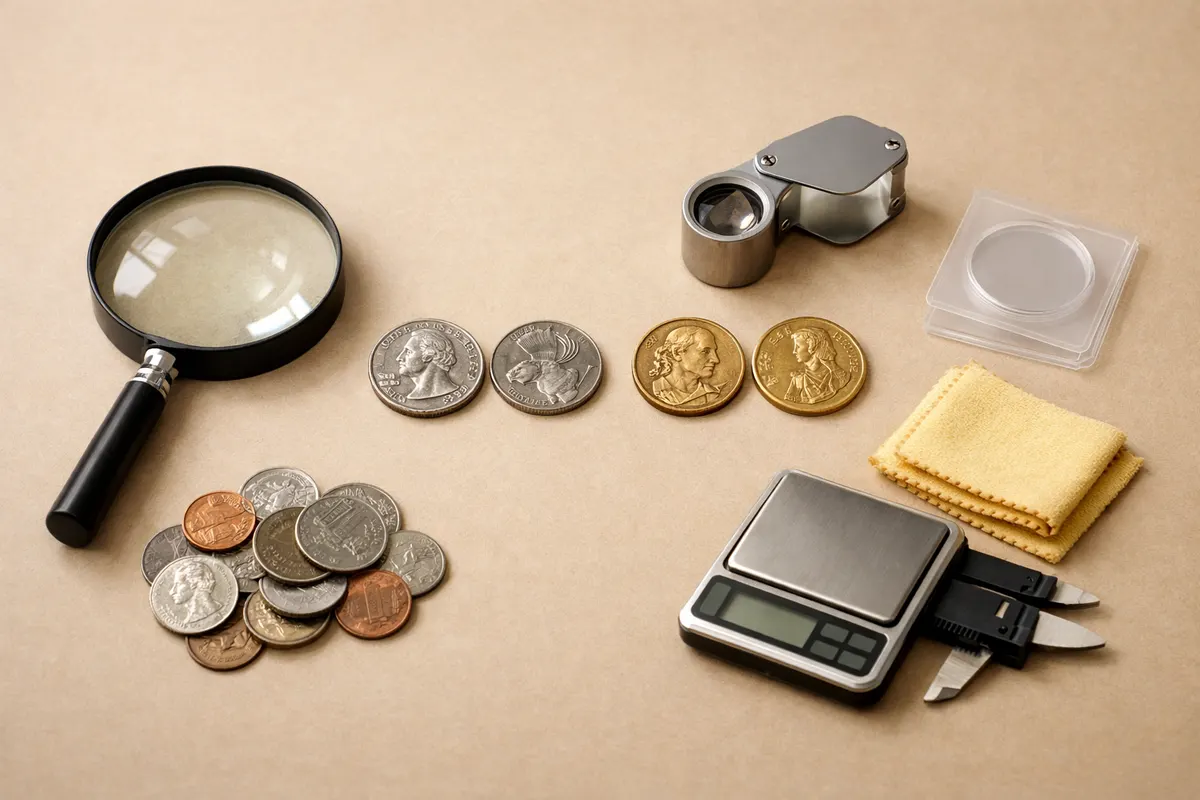
Quick answer for coin detection
Coin detection starts with careful observation: a single clear photo can often narrow possibilities but rarely proves authenticity or exact value. Look for distinctive features—date and mintmarks, portrait or device details, lettering style, edge type, and metal color—to shortlist likely matches.
Treat early results as research notes. Use visible clues to rule out obvious lookalikes, capture better photos and measurements, and then use a combination of tools (databases, comparison images, weight/size checks) or an expert to confirm identity and significance.
What it means
In this context, coin detection means using visual evidence from a photo to identify a coin’s type, country, approximate era, or whether it resembles known modern reproductions and lookalikes. It’s an initial, evidence-driven triage step that helps you decide if further verification is worthwhile.
Detection is not the same as full authentication or appraisal. Visual clues can indicate whether a coin is likely genuine, modern, altered, or a token, but photo-based detection should always be followed by physical checks—weight, diameter, and feel—or by a trusted numismatist for high-value cases.
This guide focuses on practical actions you can take with photos and basic tools so your findings stay useful: document what you see, compare with reliable references, and escalate uncertain or valuable items for specialist review.
Key clues
Start with the most diagnostic, hard-to-alter details. The date and mintmark are obvious anchors: if they’re legible, they narrow the search dramatically. Next, examine the primary device or portrait—head profiles, national symbols, or denomination numerals often differ even among lookalikes.
Surface texture, edge style, and metal color give further information. Reeded versus plain edges, raised rims, and signs of plating or unusual corrosion can distinguish original issues from later tokens, replicas, or counterfeit plated pieces.
Contextual clues matter too: where the coin was found, any packaging or lot notes, and whether similar pieces appear in the same find can change how you interpret visual evidence. Combine visible and contextual clues to form a short list of likely matches.
- Date & mintmark: legible characters cut the candidate list quickly.
- Portrait/device style: profile features, hairlines, and collars are often diagnostic.
- Legend and lettering: font style, spacing, and punctuation vary by issue and era.
- Edge characteristics: reeding, lettering, or plain edge; look for seam lines from cast replicas.
- Metal color & toning: silver, copper, bronze, nickel — color and corrosion patterns suggest composition.
- Diameter and consistent scale: include a ruler or a coin of known size in photos to compare diameter.
- Strike details: weak vs. sharp strikes, die cracks, and doubled dies help confirm specific issues.
- Wear pattern: concentric wear, high-point flattening, and rim loss indicate circulation grade.
- Tooling marks & casting signs: pitting, bubbles, or seam lines often indicate cast replicas or modern fakes.
- Provenance/context: original packaging, hoard notes, or where it was found can rule in or out certain types.
Step-by-step workflow
Follow a repeatable process so your coin detection efforts stay reliable and usable as research. Start by photographing the coin properly: clean background, even light, multiple angles, and a scale reference. Good photos are the most important single input for any later comparison.
Next, perform a visual triage. Record obvious facts—country, denomination, readable date, condition—and then look for disqualifying features (modern branding, nonsensical legends, or clear casting seams). Narrow the candidate list to a few likely issues before deeper comparison.
Finally, decide on verification steps based on value and uncertainty. For low-value or common types, a confident visual match may be enough for cataloging. For anything potentially rare or valuable, add measurements and consult a specialist or grading service.
- Photograph: shoot obverse, reverse, edge, and any close-ups of marks or mintmarks. Include a ruler or another coin for scale.
- Record: note readable text, visible date, mintmark, diameter estimate, and weight if available.
- Compare: match portrait, legend, and edge style against trusted references—catalogs, museum photos, or authoritative auction images.
- Eliminate lookalikes: check for casting seams, plating flaking, or modern design features that don’t belong to the suspected era.
- Measure: if you can, weigh and measure the coin with a scale and calipers; many lookalikes differ in thickness or weight.
- Document: save all photos and your notes as research records, with time and place found.
- Escalate appropriately: for uncertain or high-value pieces, seek a professional opinion rather than relying on one photo or automated tools alone.
Examples
Worn 20th-century silver coin: A worn portrait with a readable date but smoothed legends can often be narrowed to a decade and country. If the rim and stars match reference photos and the metal tone looks consistent with silver, the coin is likely an older circulated issue. Confirm by weighing—sterling silver and cupro-nickel variants typically differ enough to spot with a pocket scale.
Foreign bronze coin with script: Coins from some regions use distinct script styles and symbols. If the script, date format, or star-and-crescent motif matches known reference images, you can identify the issuing country and approximate period. Watch for modern fantasy pieces that borrow iconography but have odd lettering or proportions.
Commemorative vs token: A thick, brightly toned round with a commemorative portrait but no denomination is often a medal or token. Compare device placement and the presence (or absence) of denomination numerals. Tokens commonly lack precise denomination placement and may show casting flaws or broader lettering spacing.
Lookalike plated pieces: A coin that looks silver in a photo but flakes in one spot or shows a base-metal core at a rim nick is probably plated. Photos showing abrupt color shifts, bubbly corrosion, or visible bonding lines suggest electroplating rather than a true silver alloy.
Limitations
A single photo is rarely definitive. Lighting, compression artifacts, and angle can mask die markers, tiny mintmarks, or subtle toning that experts use to authenticate coins. Never treat a one-photo match as an authoritative authentication or appraisal.
Value and authenticity require more than visual similarity. Weight, diameter, edge metallurgy, and microscopic die characteristics often separate a genuine issue from a well-made counterfeit or modern replica. Lab tests, specific gravity checks, and professional grading are valid next steps for anything worth significant money.
Photos can mislead on material and condition. Metal composition cannot be certain from color alone—plating and patina can mimic silver or gold. Similarly, wear that looks heavy in a low-resolution image may be surface dirt or lighting shadowing, so physical cleaning or professional conservation should be handled carefully.
When to get help: if the coin could be rare, historically significant, or valuable, stop at the research note stage and consult a reputable numismatic dealer, local coin club, or third-party grading service. For safety and trust, document your observations and avoid making buying, selling, or conservation decisions based solely on a single photographic detection.
Related guides
Next step: use Coin Identifier - Coinora as a first pass
After you’ve checked visible clues and collected photos, try Coin Identifier - Coinora on your phone for a first-pass comparison and organized research notes. Treat app matches as starting points—not final authentication—and escalate uncertain or valuable finds to a trusted numismatist.
Take the next step →Frequently asked questions
How accurate is coin detection from a single photo?
A single clear photo can often suggest likely matches for common types, but it is not usually sufficient for authentication or accurate valuation. Accuracy improves with multiple high-quality images, scale reference, and measurements.
What should I photograph to get the best detection results?
Photograph the obverse, reverse, a close-up of any marks or mintmarks, and the edge. Use even lighting, a neutral background, and include a ruler or a well-known coin for scale. Avoid reflections and heavy shadows.
Can I tell the metal composition just from a photo?
No. Photo color and toning can suggest likely metals but cannot confirm composition. Plating and surface corrosion can mimic precious metals; weight, specific gravity, or XRF testing are required for reliable identification.
When should I consult a professional after initial detection?
Consult a professional if the coin appears rare, if visual clues are ambiguous, or if authenticity and value matter for sale or insurance. Also seek expert advice before any cleaning or restoration that could affect numismatic value.