
Coin Grading Basics: Wear, Luster, Strike, and Condition Clues
Learn how to read coin grading clues—wear, luster, strike, and surface marks—so you can estimate condition from photos and decide next verification steps.
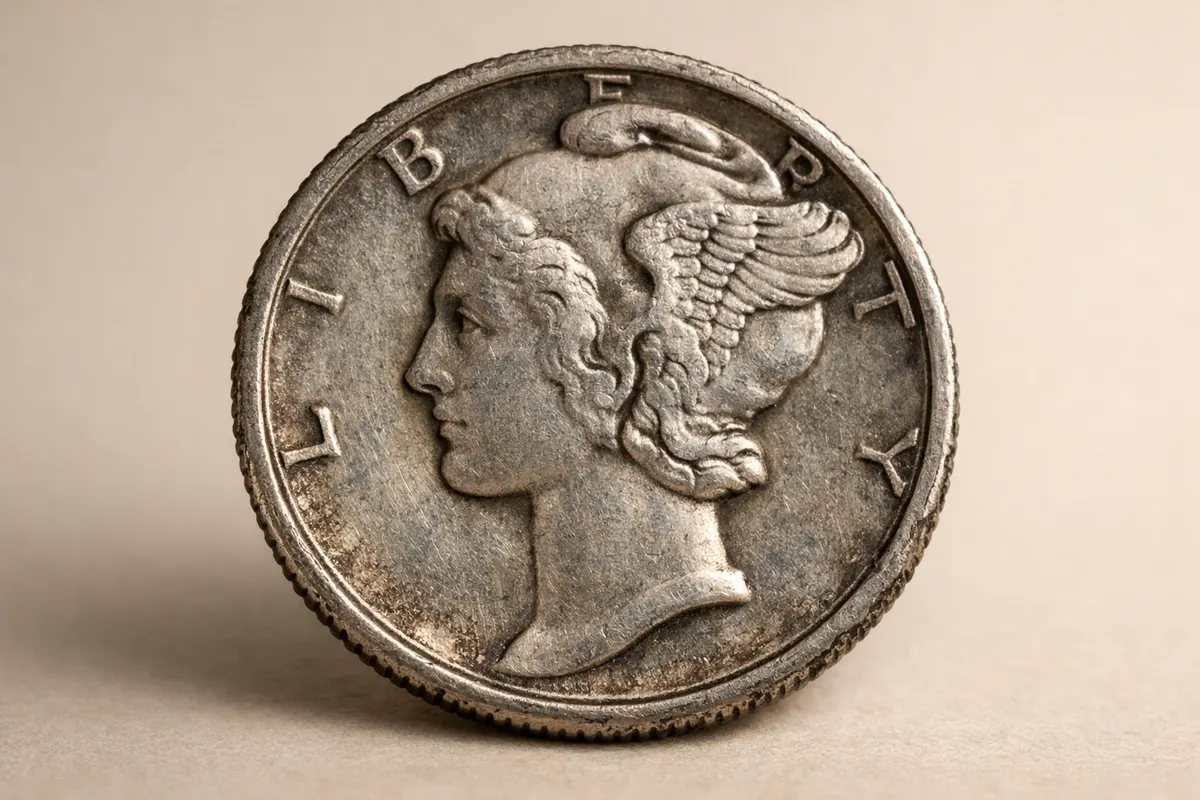
Quick answer for coin grading
Coin grading describes how much wear, surface damage, and original finish a coin shows. When working from photos, focus on four strong visual signals: wear (loss of detail on high points), luster (how light reflects from the original surface), strike (how sharply the design was impressed), and surface clues (scratches, bag marks, cleaning or corrosion).
You can often place a coin into a broad condition band—Heavily worn, Good/Fair, Fine, Very Fine, Extremely Fine, About Uncirculated, or Mint State—by checking these clues, but a photo-based estimate is not an official grade.
Use this checklist to make a careful first-pass assessment, gather consistent photos and notes, and decide whether further research or professional grading is warranted.
What it means
Coin grading is a descriptive shorthand numismatists use to communicate condition. The commonly referenced coin grading scale runs from heavily worn pieces at the low end to Mint State (uncirculated) at the high end. That scale is useful as a reference, but graders rely on multiple fine details and controlled lighting to place a coin precisely.
Wear refers to the physical loss of metal on the design’s highest points. For example, on many U. S. coins the cheek, hair, eagle’s breast, and stars are high points. If those details are flattened or merged, the coin has visible wear. The amount of detail remaining on these points is the single most reliable visual cue for condition.
Luster describes how the original mint finish reflects light. Strong, even luster that 'sheds' across fields and devices often indicates an uncirculated or lightly handled coin. Luster can be altered by cleaning, contact marks, or circulation, so it is a nuance that must be read together with wear.
Strike is how crisply the designs and letters were impressed into the planchet at the mint. Some coins were weakly struck at the mint and look softer even when unused. Distinguishing weak strike from wear is essential: weak strike shows soft details even near protected areas like the rim, while wear usually shows smoothing only on exposed high points.
Key clues
Below are the visual checks to run on every photo. Work systematically: inspect the obverse and reverse, then the rim, edge, and fields. Take notes on each clue so you can compare multiple coins or several photos of the same coin.
Keep context in mind: coins of different series and dates have different high points and strike expectations. A coin grading chart for that specific series is the best comparison tool when available.
- High points and relief: Look for smoothing or flattening on the highest elements (hair, cheek, eagle breast, crown). Reduced fine lines indicate wear.
- Lettering and date clarity: Crisp, separate serifs and fully formed digits point toward a better strike or lighter wear; soft or merged letters indicate wear or weak strike.
- Luster patterns: Even, concentric, or 'rainbow' luster around devices suggests original mint finish; patchy shimmering or dulled fields may indicate circulation or cleaning.
- Strike sharpness: Check protected areas (close to the rim) for imprint clarity. If those areas are weak, the coin was likely weakly struck, not worn.
- Fields and hairlines: Fine radial lines can be either mint-made flow lines or post-mint hairlines from handling—location and direction help distinguish them.
- Bag marks and contact marks: Small dings, especially in the fields, point to circulation; larger gouges or rim nicks reduce grade more than minor hairlines.
- Surface chemistry: Pitting, roughness, or greenish corrosion indicates environmental damage; even toning usually does not lower grade but cleaned surfaces do.
- Edge and rim condition: Repaired rims, nicks, or rim wear change the coin’s overall condition; reeded edges should be examined for consistent wear patterns.
Step-by-step workflow
Follow a repeatable workflow so your assessments are consistent. Start with clear, well-lit photos taken from perpendicular angles and at macro scale if possible. Include a simple scale or ruler for size context and multiple angles: obverse, reverse, edge, and a close crop of the high points.
Compare the photos to a series-specific coin grading chart or images of known grades. Look for the key clues above and mark whether each clue points toward circulation wear, weak strike, cleaning, or fresh mint state characteristics.
Place the coin into a broad condition band rather than a precise numeric grade. Typical bands are: Poor–Good (heavy wear), Fine–Very Fine (moderate wear), Extremely Fine–About Uncirculated (minor wear), and Mint State (no wear). Document which clues tipped your assessment.
- 1) Photograph: steady camera, neutral lighting, multiple angles, scale included.
- 2) Inspect high points and lettering first to judge wear level.
- 3) Check luster across devices and fields; note areas of patchiness.
- 4) Separate weak strike from wear by checking protected areas near the rim.
- 5) Record surface marks, cleaning signs, and edge condition in a short checklist.
- 6) Compare to a coin grading chart for the specific series and date.
- 7) Decide on a broad condition band and note uncertainties you’d want a pro to resolve.
Examples
Example 1 — A heavily circulated silver dime: Photos show the portrait’s hair merged into the cheek, the date worn thin, and dull, patchy fields with many small bag marks. Those clues point to a circulated grade—likely in the Fine to Very Fine range—depending on how much detail remains in protected areas.
Example 2 — Full luster but soft devices: A modern commemorative appears to have strong, even luster across the fields, but device detail near the rim is weak. If protected rims and lettering are also soft, the coin was probably weakly struck at the mint rather than circulated; this matters because struck softness affects value differently from circulation wear.
Example 3 — Bright surfaces with hairlines and sharp devices: When a coin shows bright, even surfaces, crisp devices, and many fine, shallow linear marks that follow the same direction, suspect post-mint cleaning or abrasive contact. Cleaning can lower desirability even when wear is minimal, so note it and avoid calling the coin uncirculated based on brightness alone.
Example 4 — Edge damage and localized corrosion: If the obverse and reverse are otherwise attractive but the rim has a deep nick and there are small areas of pitting on the reverse, the overall condition band will be reduced. Surface chemistry issues often matter more to specialists than a small number of contact marks.
Limitations
Single photos and poor lighting create uncertainty. Glare can hide micro-scratches; shadows can obscure luster; oblique angles can exaggerate or hide high-point wear. If you cannot photograph the coin under neutral, diffuse lighting from straight-on and close crop the high points, your confidence in any condition estimate should be low.
Some problems are invisible in photos: repairs, subtle chemical alterations, and certain counterfeits require tactile inspection, weight and diameter checks, and sometimes metallurgical testing. A photo-based assessment is preliminary; it is not a certification.
Different series have different strike and luster norms. A weak strike on an early 20th-century date may be common and not penalized as heavily by collectors as a similar weakness on a series known for strong strikes. Use series-specific references to avoid over-penalizing a coin for characteristics that were normal at the mint.
When to escalate: if a coin appears to be high grade, has potential rarity, or shows suspicious cleaning or repair signs, seek an in-person opinion from a trusted dealer or a respected third-party grading service. Before sending anything for professional grading, organize photos, provenance, and your condition notes so the experts can move quickly and you can avoid unnecessary submissions.
Related guides
Next step: organize photos and notes with Coinora
After you run these condition checks, use Coinora to keep your photos, label the clues you found, and prepare a short summary for deeper research or a professional opinion. Organized photos and consistent notes make it easier to compare to coin grading charts and to share with experts when you want a verified grade.
Take the next step →Frequently asked questions
How accurate is a coin grading estimate from a photo?
A photo-based estimate can reliably place a coin in a broad condition band, especially for obvious wear or mint-state coins, but it is often insufficient for precise numeric grades. Lighting, angle, and image quality affect reliability, and tactile or instrumental checks can reveal hidden issues.
What visual signs indicate a coin was cleaned?
Cleaning often produces unnatural brightness, hairline scratches with similar direction, and flat, reflective fields that lack natural luster. Look for fine parallel scratches, abrupt shifts in toning, or unusually glossy surfaces—these are common red flags.
How do you tell weak strike from circulation wear in photos?
Check protected areas close to the rim and lettering: if those are soft as well as the expected high points, the coin was likely weakly struck. Wear generally affects exposed high points first while rims and recessed details remain clearer until later stages of circulation.
When should I get a professional grade instead of relying on my own checklist?
Consider professional grading when a coin appears to be high grade or potentially valuable, when photographs show ambiguous cleaning or repairs, or when you need a certified grade for sale, auction, or insurance. Professional services provide standardized grading and encapsulation that a photo estimate cannot.