
Coin Mint Marks: Where to Find Them and What They Can Tell You
Learn where coin mint marks typically appear, how to spot them in photos, and which clues narrow origin and date without overclaiming identification.
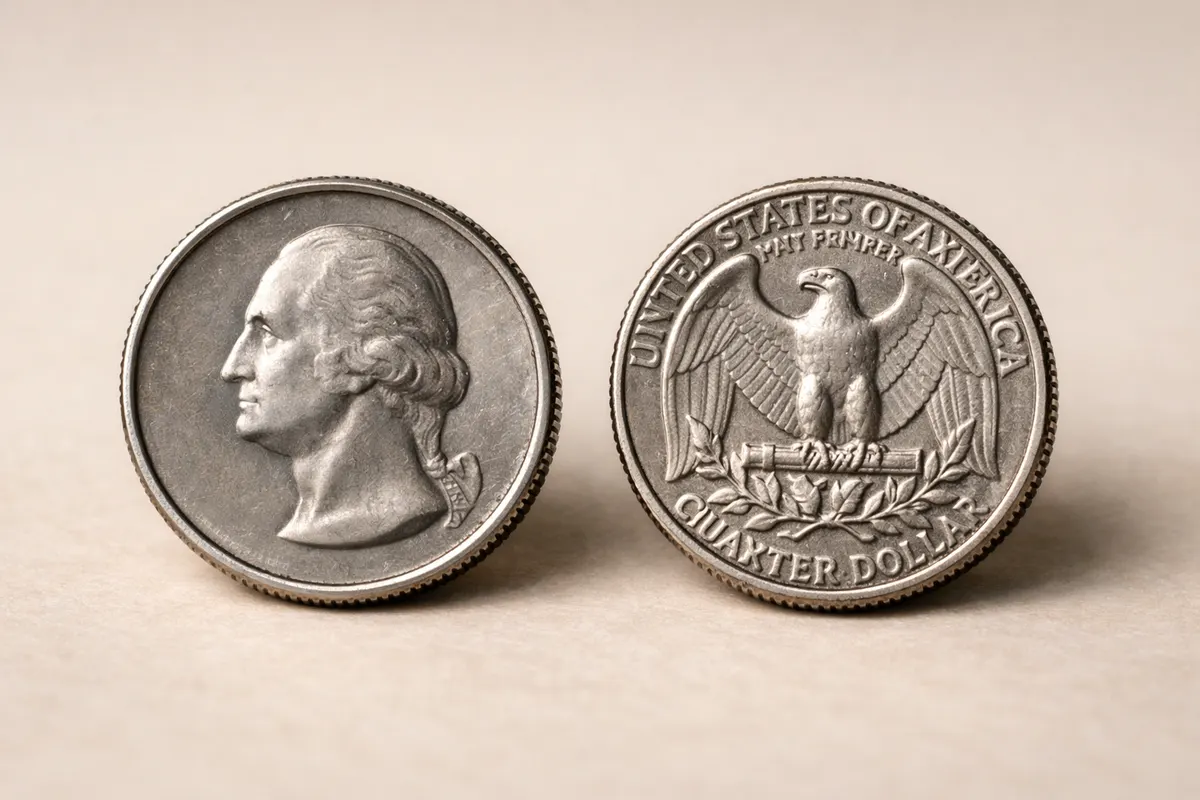
Quick answer for coin mint marks
Coin mint marks are small letters, symbols, or privy marks added by a mint to indicate where (and sometimes when) a coin was produced. On many modern coins the mint mark appears near the date on the obverse (front) or on the reverse (back), but placement varies by country, series, and era.
A clear, well-lit photo of both sides of the coin plus a close-up of the suspected mark will usually let you tell whether a visible symbol is a mint mark, a minting defect, a post-mint damage mark, or part of the coin’s design. Mint marks can narrow origin and production facility—helpful for cataloging and comparison—but they rarely confirm value or authenticity on their own.
If you’re documenting or identifying coins, note the mark’s exact position relative to the date, rim, and main design elements, record whether it’s raised or incuse, and keep the images and notes together with the identification result for later verification.
- Check both sides before deciding a mark is a mint mark; many countries place tiny letters, symbols, or privy marks away from the date.
- Record the mark's exact location, shape, depth, and nearby design details so you can compare it against references later.
What it means
A mint mark is a mint's identifier: a small character placed on a coin to show which mint facility produced it. Historically mints used single letters (for example, D for Denver, S for San Francisco in the United States), but marks can be full words, symbols, privy marks, or even mint-master initials depending on the issuing country and time period.
Knowing a coin’s mint mark helps narrow the coin’s origin (which mint and sometimes which country), places the issue in a production context (certain mints produced different varieties in different years), and can point collectors toward specific die varieties or mint-run rarities. For example, in some U. S. series a particular mint produced far fewer coins in a given year, which affects rarity discussions.
Mint marks are not universal evidence of authenticity or value. A mark can be added maliciously or accidentally altered by wear, cleaning, or post-mint damage. Treat mint marks as a key clue to combine with other evidence: date, design details, edge lettering, metal composition, and reliable reference catalogs or databases.
- Treat a mint mark as production context, not a value guarantee; check it alongside date, denomination, design, and condition.
- Use country- and series-specific references because the same letter can mean different mints in different coin systems.
Key clues
Use these visible and contextual clues to find and interpret mint marks on a coin. Start with obvious locations, then expand to less common placements and corroborating evidence.
Remember that countries and series vary widely: some put marks near the date, others on the reverse field, and some use edge lettering or micro-engraving. Always check both sides and compare the mark’s shape, depth, and alignment to high-quality reference images.
- Location relative to the date: Many mints place their mark beside or below the date on the obverse. If you see a tiny letter next to the year, it’s often a mint mark.
- Location on reverse: Several series use the reverse—look near the denomination, wreath, or above/below the main motif.
- Edge marks and lettering: Some coins carry mint identifiers on the edge (lettering, reeded sections with symbols, or incuse marks). Rotate the edge carefully under good light.
- Raised versus incuse: A raised mint mark is struck up from the die, while an incuse mark is sunken. The difference affects how wear alters the mark and what it may resemble when damaged.
- Style and font: Compare letter shapes and serif details to reference photos. A handwritten-looking dot or spur can distinguish a mint’s characteristic mark from surface noise.
- Privy marks and commemorative symbols: Privy marks are small symbols added for special issues; they are not always mint-location markers but can indicate a special production batch.
- Wear and damage: Look for consistent die flow and strike patterns around the mark. Random scratches, corrosion, or tooling marks will look different from deliberate stamping.
- Tooling, countermarks, and overstrikes: Some coins were counterstamped after striking—often by merchants or local authorities. These countermarks can be mistaken for mint marks but require contextual dating and provenance checks.
- Corroborating details: Check metal color, weight, and diameter against standard specifications. Mint marks rarely contradict physical specs; if the specs differ, suspect misattribution or alteration.
- Reference comparison: Use trusted catalogs (country-specific catalogs, Krause catalogs, or major grading services’ databases) to match mark placement, spacing, and style for the specific year and denomination.
Step-by-step workflow
Follow a consistent workflow when you inspect coins for mint marks. This helps avoid common mistakes—like relying on a single worn photo or assuming a letter is the mint mark without context.
Step 1 — Inspect both sides and the edge: Start by holding the coin under directional light and a loupe or macro lens. Look for small letters or symbols near the date, under the main motif, or on the rim edge. Rotate the coin to view oblique light which reveals shallow marks.
Step 2 — Photograph systematically: Take a full obverse and reverse photo, then capture a close-up of the suspected mint mark at high magnification. Include a scale (ruler or coin-size guide) and photograph at multiple angles to show depth and tone. If you use an identification app, keep the close-ups paired with the full images.
Step 3 — Note the mark details: Log the exact position (e. g. , “below date, 2 mm left of the 8”), the character shape, whether it’s raised or incuse, and any nearby die features. Record the coin’s year, denomination, and obvious design differences from standard examples.
Step 4 — Compare with trusted references: Search catalogs and specialist databases for the year/denomination to confirm common mint placements and documented varieties. Look for die markers that appear near the mint mark in known varieties.
Step 5 — Evaluate consistency and anomalies: If the mark’s style or placement differs from references, consider explanations—wear, repunching, counterstamp, or later tooling. When in doubt, record your uncertainty and seek a second opinion from a numismatic forum or professional grader.
Step 6 — Preserve evidence and notes: Keep the photos, measurements, and a short note about why you think it’s a particular mint mark. If you track finds, link mint-mark notes with provenance and storage records so the observation stays with the coin.
- Work from broad to narrow: full coin, date area, reverse details, edge, then close-up of the suspected mark.
- Keep notes with your photos so a later catalog check or expert review can see why you considered a mark legitimate.
Examples
United States Lincoln cent (post-1909): On many Lincoln cents the mint mark appears to the right of the date on the obverse. In the 20th century, common U. S. mint letters included D (Denver), S (San Francisco), and no mark (Philadelphia until the mid-1980s for some series). A photograph showing the date and the area immediately to the right will usually reveal whether the coin carries a mint mark.
Modern European coins (euro-zone): Some euro coin issues include mint or mint-master marks on the reverse, often very small and integrated into the national design. For example, certain national sides include a small mint mark near the engraver’s initial or the date; you may need high magnification to separate it from decorative flourishes.
Older world coins and hammered issues: Mint marks on older or hammered coins can be letters stamped in irregular positions, symbols, or marks applied by a regional moneyer. These may not align with modern catalog conventions and often require specialized catalogs or expert help to interpret.
Commemorative or privy-marked issues: A modern commemorative may include a privy mark that looks like a mint mark but is actually a design element for a particular issue. Treat these as identifying features for the issue rather than a production-mint indicator unless references show otherwise.
- For U.S. coins, compare the letter and placement against the exact year and denomination before assuming D, S, P, or no mark means a specific mint.
- For world coins, check whether the small symbol is a mint mark, privy mark, engraver mark, or part of the design before using it as evidence.
Limitations
Mint marks are a strong narrowing clue but not definitive proof. Wear, corrosion, cleaning, tooling, or counterstamps can obscure or mimic mint marks. A small scratched dot near the date may look like a letter when photographed at a certain angle, so avoid treating a single photo as conclusive evidence.
Geographic and historical variation matters: U. S. mint practices are often used as examples, but many countries use different conventions—some never used small letter marks, others use full words, and older issues might have no consistent placement. Avoid overgeneralizing from one country or series to every coin worldwide.
When the mint mark is missing or worn, other evidence becomes primary: die markers, design differences, metal content, weight, and edge treatment. For potentially valuable or rare coins, check specialist catalogs and consider third-party grading or laboratory tests (for metal composition) rather than relying solely on a mint-mark observation.
If you need authentication, grading, or an official valuation, consult a qualified numismatist or an accredited grading service. Mint marks assist identification and cataloging but do not substitute for professional authentication or valuation.
- Separate high-confidence, partial, and uncertain outcomes.
- Tell the reader when to verify with a trusted source or professional.
Related guides
Capture both sides and keep mint-mark notes with Coin Identifier - Coinora
Use the Coin Identifier - Coinora app on your device to photograph both sides of any coin, add a close-up of the suspected mint mark, and attach position and condition notes to the identification result. Treat the app as a way to record evidence and organize your observations—then verify unusual or potentially valuable finds with specialist references or a professional grader.
Take the next step →Frequently asked questions
Where is the mint mark usually located on a coin?
Most modern coins place the mint mark near the date on the obverse or in a small field on the reverse. Some series use the edge or include privy marks. Placement varies by country and era, so inspect both sides and the edge under angled light.
Can a mint mark tell me a coin’s value?
A mint mark can affect rarity and collector interest, but it doesn’t by itself determine value. Use the mint mark to narrow origin and compare known production numbers or rare varieties. For value, combine mint-mark evidence with condition, demand, and certified grading.
What if the mint mark is worn or looks like damage?
Worn mint marks can be hard to read; try oblique lighting, magnification, and multi-angle photos. If the mark looks inconsistent with reference images, consider wear, corrosion, counterstamps, or tooling. Document uncertainty and seek expert comparison rather than assuming a specific mint.
How should I photograph a mint mark for identification?
Photograph the full obverse and reverse, then take a high-magnification close-up of the suspected mark from multiple angles. Include a scale reference and use steady, directional lighting to show depth. Save photos together with notes on position, raised/incuse quality, and any nearby die features.