
Coin Identification
Indian Head Penny: How to Identify, Value, and Key Dates
Learn which visible clues confirm an indian head penny, what typically affects its market worth, and the next checks to verify a coin from photos.
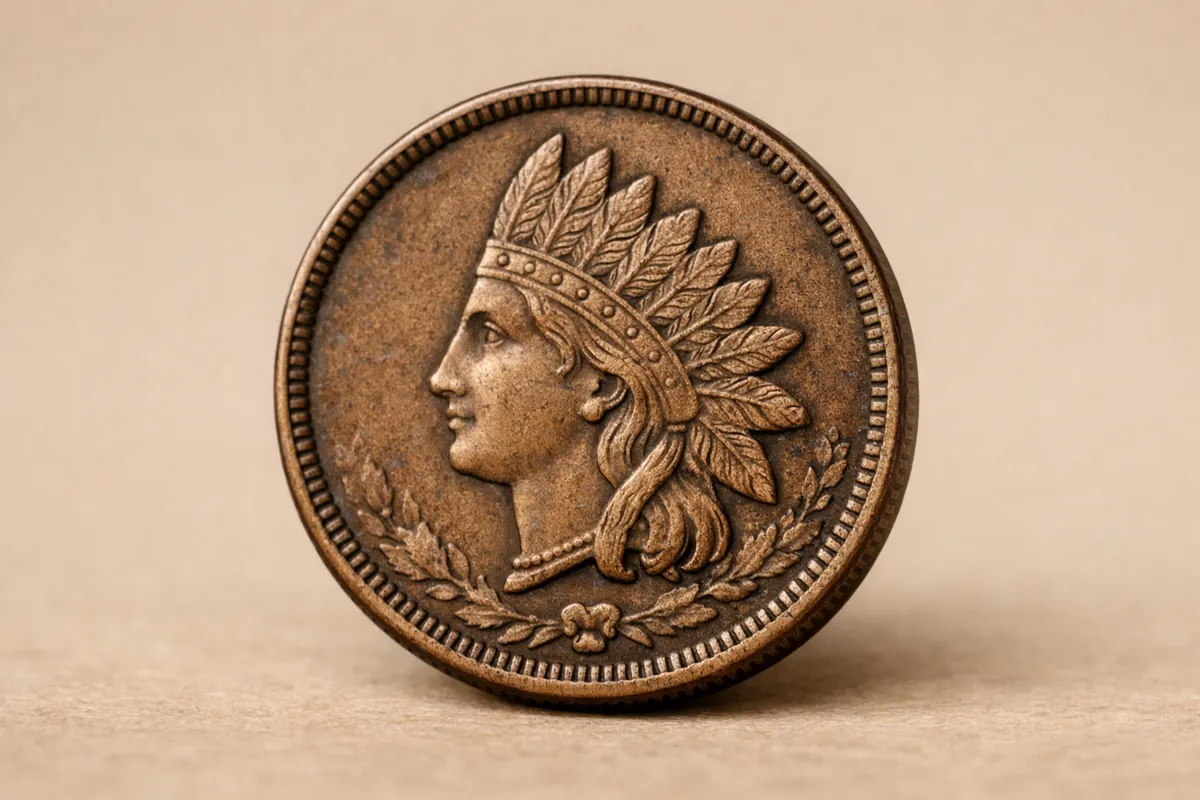
What an Indian Head Penny is and why it matters
The indian head penny is a United States one-cent coin struck from 1859 through 1909, designed by James B. Longacre. It features a Liberty head wearing a Native American–style feathered headdress on the obverse and a wreath on the reverse. Collectors use the design, date, and composition changes to separate common survivors from scarce or valuable pieces.
Two composition periods matter for identification and weight: 1859–1864 pieces were a copper-nickel alloy (often called 'white cents') and are heavier; from 1864 onward the mint used bronze (95% copper, 5% tin and zinc), which is lighter and has a warmer tone. That change affects typical appearance, edge color, and how the coin wears over 100+ years.
The design changed slightly in 1860: the reverse moved from a laurel wreath to an oak wreath with a shield and ribbon. Those reverse details, the date numerals, and rim condition are the primary photo-checkable features that separate Indian Head pennies from lookalikes and later Lincoln cents.
- Common minting years: 1859–1909; designer: James B. Longacre.
- Two main compositions: 1859–1864 copper-nickel (heavier), 1864–1909 bronze (lighter).
- Reverse design: 1859 laurel wreath; 1860–1909 oak wreath with shield and ribbon.
How can you tell an Indian Head Penny from a photo?
A photo can confirm many visual clues but cannot by itself prove metal composition or provenance. Start with the obverse: look for Liberty’s profile with a feathered headdress, the word 'LIBERTY' on the headband (when visible), and the date centered at the bottom rim. The style of the feathers and the hairlines are design-specific—sharp feathers and a clear headband are signs of good strike and lower wear.
Check the reverse details: 1859 examples show a laurel wreath; coins from 1860 on typically show an oak wreath with a shield and a ribbon above. Compare the wreath leaves, shield shape, and how the words ONE CENT are centered within the wreath. Photograph both sides, edges, and a close-up of the date so punctuation or repunched numbers are visible.
Use scale and reference: an authentic Indian Head penny is about 19.05 mm across and has a plain edge. If you can weigh the coin, expect roughly 4.67 g for copper-nickel 1859–1864 types and about 3.11 g for the later bronze pieces; large deviations suggest a different metal, heavy damage, or a modern reproduction. Because a photo cannot record weight or subtle magnetic response, treat those as follow-up checks.
- Obverse clues: Native headdress profile, readable headband lettering, date at 6 o’clock.
- Reverse clues: laurel (1859) vs oak-with-shield (1860–1909); ONE CENT centered inside wreath.
- Edge and size: plain edge, ~19.05 mm diameter—compare with a ruler in the photo for scale.
- Wear patterns: check high points (cheek, feather tips, shield) for consistent wear rather than irregular gouges.
- For quick market context questions, also note the coin’s visible condition before checking indian head penny value.
Key facts
This compact table summarizes the measurable attributes collectors use to verify an Indian Head penny. Use a caliper for diameter and a small digital scale for weight when possible; photos should include a scale reference to make later verification easier.
Remember that a photo shows size relationships and surface detail but not metallic composition or internal alterations. Use the table below as a checklist for which attributes a photograph can suggest and which require hands-on inspection.
| Attribute | Typical | Notes |
|---|---|---|
| Years | 1859–1909 | Design changed slightly after 1859; last year before Lincoln cent introduced |
| Designer | James B. Longacre | Obverse: Liberty with feathered headdress |
| Diameter | 19.05 mm | Same nominal diameter as later cents; include scale in photos |
| Weight | 4.67 g (1859–1864), 3.11 g (1864–1909) | Use scale to confirm alloy period; photos cannot confirm weight |
| Composition | Copper-nickel (early), Bronze (later) | Color and edge wear differ by composition |
| Edge | Plain | No reeding; irregular edge suggests alteration or token |
| Reverse detail | Laurel (1859) vs oak-with-shield (1860–1909) | Reverse type helps narrow production year |
- Bring a ruler or standard coin into photos to confirm the 19.05 mm diameter visually.
- If the date digits appear re-punched or unusually thin, request a higher-resolution, shadow-free close-up for die-checking.
What an Indian Head Penny is typically worth in resale
Any single-photo assessment can only estimate market tiers; final resale value depends on date, mint mark, grade, originality (no cleaning or damage), and current demand. Below are commonly observed resale bands for circulated and collectible conditions. These ranges are approximate and reflect typical secondhand-market outcomes rather than formal appraisals.
Key drivers of price include the precise date (some years are scarce), whether the coin shows signs of cleaning or harsh damage, and whether any mint errors are present. Authentication and grading by a reputable third party will materially affect realized price, so consider these early checks rather than relying on a single image.
| Tier | Typical range (USD, approximate) | What drives price |
|---|---|---|
| Heavily worn, common dates | $1–$10 | Circulated, major wear; common dates and no collector premium |
| Moderately worn to fine | $10–$75 | Better detail, no cleaning; attractive surfaces |
| Extremely Fine to AU (Almost Unc) | $75–$400 | Strong strike, minimal wear, desirable date |
| Uncirculated (mint state) | $300–$2,000+ | MS grade, original surfaces; premium for eye appeal and rarer dates |
| Key rarities & scarce mint marks | $1,000–$100,000+ | Specific dates/mint marks (collector key dates), proof issues, or certified rarities |
- Typical low-end circulated pieces often resell for modest amounts; for quick context search for indian head penny value before listing.
- High-value examples are usually tied to specific dates, mint marks, or exceptional uncirculated condition; provenance and certification lift sale price significantly.
- Avoid claims of a fixed price from a single photo—use weight, diameter, and close-ups of date and reverse to narrow the range.
Coins and tokens commonly confused with an Indian Head Penny
Small bronze or copper tokens, foreign low-denomination coins from the late 19th century, and early Lincoln cents can be mistaken for Indian Head pennies by inexperienced viewers. Photo clues that help separate them include precise wreath and shield shapes, the headband details on the obverse, the date style, and rim thickness.
Modern reproductions, souvenir tokens, and cleaned or heavily altered originals sometimes mimic the look of an Indian Head penny. Watch for unusually bright or glossy surfaces (potentially indicating a harsh chemical clean) and mismatched edge thickness that a size reference in your photo will reveal.
- Victorian-era British halfpennies and some tokens: similar diameter but different portrait style and lettering—compare legend text and portrait orientation.
- Plated modern fakes: color may look right in a photo but weight and magnetic response differ—follow up with weight and magnet tests.
- Lincoln wheat cents (post-1909): date position and reverse (wheat ears) are different; if the date is worn, compare headband and feather shapes closely.
Simple care and handling tips for Indian Head Pennies
Do not clean Indian Head pennies with abrasives or acidic solutions; cleaning often lowers collector value even if it improves appearance. Handle coins by their rims to avoid adding fingerprints or oils to the fields and high points.
Store coins in inert holders (mylar flips or acid-free envelopes) and avoid PVC plastics that can release damaging compounds. Keep them in a stable, low-humidity environment and separate high-grade examples from circulated bulk coins to prevent abrasion.
- Avoid dips and polishes—collectors prefer original surfaces.
- Label storage with date, source, and any known provenance to help future resale or grading.
- If you suspect a rare date, seek an expert opinion before any aggressive cleaning or polishing.
Frequently asked questions
What are the indian head penny key dates to watch for if my coin's date is worn?
When a date is hard to read, focus on historically scarce years such as 1877 and late-1900s low-mintage issues, and look for mint marks or distinctive die traits. A worn 1877 is often a high-interest piece because that year had a small mintage and many survivors show heavy wear; close-up photos of the remaining numerals, the wreath detail, and the letter shapes can help experienced collectors or tools narrow possibilities. For a final determination, request weight/diameter checks and consider third-party grading or specialist input.
Can I tell if my Indian Head penny is authentic from a photo?
A photo can show design, wear patterns, and suspicious surface treatments, but it cannot prove authenticity by itself. Authentication often requires weight, diameter, metallic tests (e.g., non-destructive XRF in some labs), and inspection for die markers and tooling under magnification. Use photographic evidence as a first pass: clear close-ups of obverse, reverse, edge, and the date will reveal many red flags, but final confirmation typically needs hands-on checks.
Which Indian Head pennies are usually the most valuable in a casual resale market?
Rarer dates and mint-marked issues in high grades command the highest prices. Coins with scarce dates, exceptional uncirculated condition, original surfaces, or certified grades (by a reputable grading service) typically bring the strongest bids. Conversely, common dates with heavy wear or obvious cleaning usually sell in lower bands. Always treat single-photo estimates as provisional—condition and authenticity drive price more than image alone.
How should I photograph my Indian Head penny to help an expert or tool evaluate it?
Take separate, well-lit, high-resolution photos of the obverse, reverse, edge, and date area. Include a clear scale reference (ruler or a modern coin of known diameter) in at least one image. Use diffuse light to avoid specular glare and a stable macro or close-focus mode for detail. These photos make it easier to flag wear, repunched dates, or surface treatments, and they improve the quality of any remote tool-based or human first-pass assessment.
Related guides
Compare your photo against Indian Head Penny clues
If you’ve photographed your coin and want a quick, evidence-based first pass, use Coin Identifier - Coinora to compare your images against the visual clues in this guide. The tool can highlight date, design, and visible wear features so you know which follow-up checks—weight, diameter, or a hands-on expert opinion—are most useful next. Visit https://coin-identifier.app/tools/free-coin-identifier to try an on-device comparison; remember that a photo is an early step, not a final authentication or appraisal.
Take the next step →