
Coin Application: How to Read Photos and Check Attribution
A clear guide to coin application by photo: what a picture can prove, which clues matter, and practical next steps before you rely on an ID.
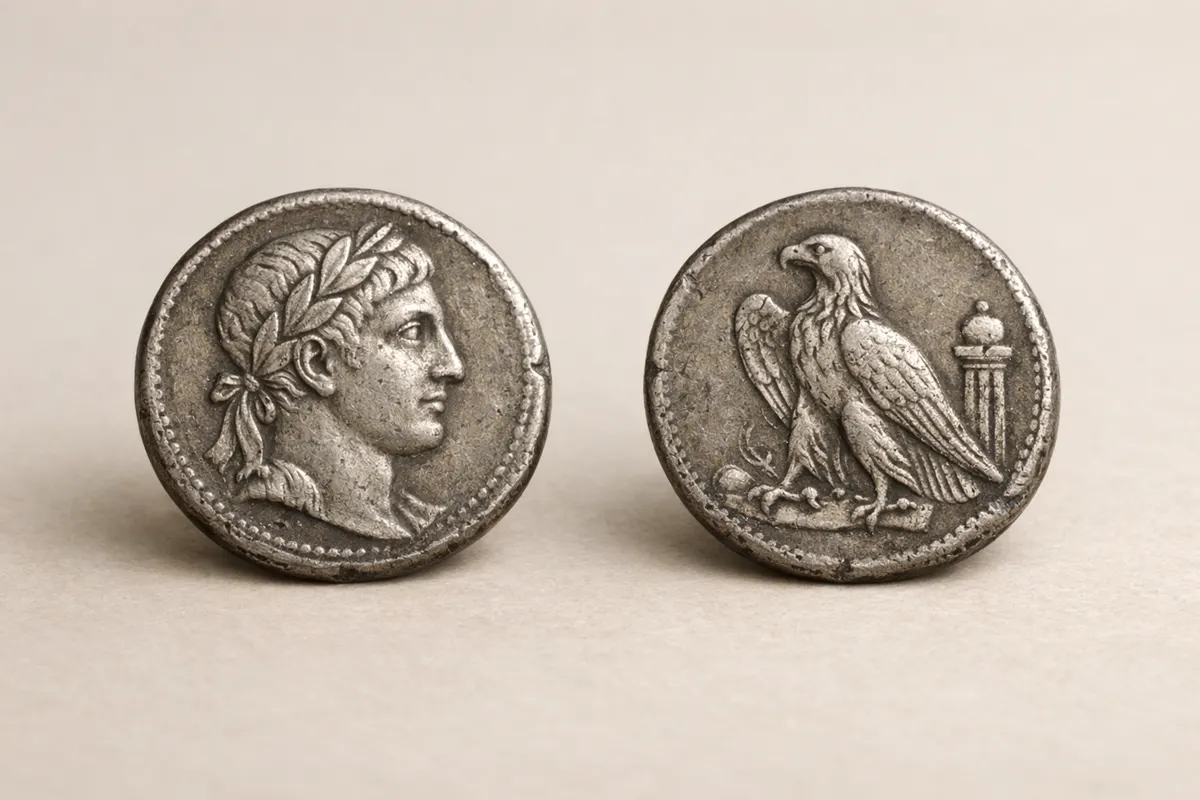
Quick answer: what coin application a photo can support
Coin application from a single photo can usually show the design family, likely country or era, and a plausible denomination when legends, portrait, or date are clear. If the obverse (portrait and legend) and reverse (denomination or emblem) both read well, you can often place the coin to a series or issuing authority with high confidence.
However, when wear, damage, or partial legends obscure key details, a photo only supports a tentative attribution. For example, a worn Roman coin with a visible emperor portrait and a fragmentary reverse type may be narrowed to a decade or ruler, but not to a specific officina, mint mark, or rare variant.
Practical takeaway: use the photo to collect evidence (legend text, portrait type, date style, edge features) and then run a short verification checklist before you rely on the coin application for value conclusions, cataloguing, or sale.
- High-confidence: clear legend, readable date, intact portrait/central device.
- Probable: major design elements visible but some legend characters missing.
- Tentative: heavy wear, corrosion, or partial devices; treat as uncertain.
What coin application means in a photo-based ID
Coin application here means the act of assigning a coin to a specific issue, series, date range, and denomination based on visual evidence. In photo-driven workflows, that assignment depends on readable inscriptions (legends), portrait types, reverse symbols, and manufacturing clues such as mint marks or edge lettering.
A successful coin application balances three things: which observable details the photo preserves, how those details map to known issues in reference catalogs, and how much wear or alteration has changed the coin’s appearance. Good photos reduce ambiguity by preserving detail in both obverse and reverse.
For collectors and researchers, coin application can be descriptive (telling what the coin appears to be) or prescriptive (declaring it as an exact issue). Descriptive statements like “likely 1901 Morgan dollar” are appropriate when the image supports most but not all identifying marks. Prescriptive declarations—saying a coin is unquestionably a specific mint variety—require higher-quality evidence.
- Application = assigning to an issuing authority + series + denomination based on visible evidence.
- Descriptive attribution is safer than absolute claims when any key detail is missing.
- Photos that capture both obverse and reverse, plus a close-up of the legend or date, make the strongest applications.
Key visual clues that support a coin application
Start with the legend (the text along the rim or around the portrait). Full or partial words can often identify the issuing country, ruler, or motto. Even a fragment like “REX” or “UNITED” narrows the field quickly. Note whether the letters are Latin, Greek, Arabic, or another script—script alone rules out large swathes of issues.
The portrait and portrait style are second in importance. Classical portrait types (e.g., Roman emperor busts, busts of monarchs, Liberty portraits) are diagnostic. Look for hairstyle, diadems, crowns, or facing direction—small stylistic differences often separate rulers or decades within a series.
Reverse devices and denomination markings are decisive when present: numeric denominations, wreaths, shields, pelleted fields, or mintmarks can move an identification from probable to confident. Combine those marks with planchet size and apparent metal (color and toning) to check consistency with the proposed application.
- Legend: readable letters/words, script, and spacing.
- Portrait: facing, hair/crown style, and realism vs. stylized profile.
- Reverse device: numeric denomination, symbol, or mintmark.
- Date style: full date, partial numerals, or typographic era indicators.
- Planchet features: metal color, reeded edge, or edge lettering visible at angle.
Step-by-step workflow to test a coin application from a photo
1) Capture and inspect both sides. Ensure the photo set includes the obverse and reverse taken under even light. If you only have one side, interpret the application as partial and treat the outcome as provisional. If lighting hides legends, tilt the coin gently to bring letters into relief and photograph again.
2) Transcribe what you can read. Work left-to-right around the rim and record every clear letter, number, or punctuation. Even single characters help: a lone ’G’ or ’MV’ cluster can match catalog entries. Note ambiguous characters with parentheses or question marks—this preserves uncertainty.
3) Compare the transcription to reference patterns. Use coin catalogs, online databases, and known type lists to find matches for legend fragments and portrait types. When you find candidates, check reverse devices and any available mint marks against those candidates.
4) Check size and metal clues. Estimate diameter by photographing the coin next to a ruler or common object; color and surface reflectivity help rule out plated or modern restrikes. Size and metal must fit the candidate issue (for example, a candidate that was struck in silver is unlikely if the photo shows a copper planchet).
5) Test lookalikes and common confounders. Compare your candidate to frequent imitators: restrikes, modern copies, and circulated foreign issues with similar portraits. Record the features that support the chosen application and the features that contradict it.
6) Assign confidence and next steps. Label your application as high-confidence, probable, or tentative. For anything beyond probable—especially for rare or high-value types—plan a secondary check: coin grading, in-hand inspection by an expert, or a provenance check.
- Include both obverse and reverse photos; single-side IDs are provisional.
- Transcribe legends and dates verbatim, marking uncertain characters.
- Match portrait type + legend fragment before trusting a denomination claim.
- Use size/metal clues to reject mismatched candidates.
- Always search for lookalikes: modern restrikes and foreign lookalikes are common.
- Record a confidence level and a concrete verification step.
Practical examples of coin application from photos
Example 1 — High-confidence: a 1936 British florin. The obverse photo shows a full legend including ‘GEORGIVS VI D:G:BR:OMN:’ and a clear date, while the reverse shows the crowned harp and the numeric denomination. Metal tone matches silver; the diameter appears consistent with a florin. Together these clues make the application to the 1936 florin secure.
Example 2 — Probable: a nineteenth-century U.S. large cent. The portrait is a mature-haired Liberty head and the reverse wreath is visible, but the date rim is heavily worn and only two numerals are legible. The application to the broad date range (e.g., 1816–1839) is probable, but a specific year shouldn’t be recorded without a clearer image or an in-hand check.
Example 3 — Tentative/misleading: a modern token resembling a medieval denier. The portrait and legend evoke medieval designs, but the planchet looks modern and the reverse contains a recent corporate logo faintly visible under wear. In this case the photo suggests a modern reproduction inspired by medieval types—an incorrect vintage application is a common mistake when design echoes older motifs.
- High-confidence example: intact legend + readable date + matching reverse device.
- Probable example: strong type match but missing date or mint mark.
- Tentative example: modern features or partial legends that mimic older types.
Limitations and when to seek verification for a coin application
Photos cannot prove metallurgical composition, interior toolmarks, or microscopic die varieties. Many high-value numismatic decisions rely on in-hand attributes—weight, precise diameter, metal tests, and die cracks—that a standard photo cannot capture. Treat any high-value attribution based solely on a photo as a preliminary hypothesis.
Wear and cleaning change surface details. A cleaned coin can lose key die markers and fine legend serifs, making an image-based application riskier. Similarly, heavy corrosion or encrustation can alter portrait shapes and hide mint marks. When the suggested attribution depends on a small detail that may have been removed, flag the application as uncertain.
When to get professional verification: if the coin’s market value changes significantly based on a specific die variety, mint mark, or rarity claim; if a legal or provenance issue is at stake; or if the photo shows anomalies that suggest a counterfeit. For these cases, an in-person appraisal, a metal test, or photo review by a recognized numismatic specialist is appropriate.
- Photos cannot replace weight, diameter, or metal composition tests.
- Cleaning, corrosion, and tooling can mimic or erase identifying marks.
- Get a second opinion or lab test for high-value or rare attributions.
Related guides
Next step: confirm the photo application with a quick scan
Use Coin Identifier - Coinora’s photo identifier as a fast, evidence-first next step after you check visible clues. Treat the app’s result as a first-pass attribution: it helps match portrait types and legend fragments from your phone photos so you can prioritize which coins need deeper verification. Try the photo identifier tool at https://coin-identifier.app/tools/free-coin-identifier and follow up with a specialist if the application affects value or authenticity.
Take the next step →Frequently asked questions
How many photos do I need for a reliable coin application?
At minimum, provide clear photos of both obverse and reverse under even light. Add a close-up of the legend or date and a photo of the coin’s edge if it has lettering or reeding. Three to five images (obverse, reverse, legend close-up, edge, and a scale shot) are enough for a confident, photo-based application in most cases.
Can a phone photo mislead an application?
Yes. Glare, shallow depth-of-field, and odd color balance can hide or distort letters and portrait details. Tilt to reveal worn legends, use diffused light to avoid hotspots, and include a scale. If a phone photo creates ambiguity for a critical detail, treat the application as provisional until you can get clearer images or an in-hand check.
What if the legend is partially missing—can I still identify the coin?
Partial legends are still useful. Combine the visible fragment with portrait type, reverse device, date style, and planchet clues. For instance, a fragment like ‘LIB’ plus a Liberty portrait points strongly to U.S. issues. Record uncertain characters and search catalogs with wildcards or fragment matches; many reference databases can return likely candidates from partial text.
When should I contact a professional for verification?
Contact a professional when the attribution would change the coin’s market value materially, when rarity hinges on a small die marker or mint mark, or when you suspect a counterfeit. Also seek experts if cleaning, corrosion, or poor image quality leaves important features ambiguous. Professionals can examine weight, metallurgy, and die characteristics that photos cannot show.