Valuable Foreign Coins
Valuable Foreign Coins: Visual Clues and Safe Next Steps
Learn which details a photo can reliably show for valuable foreign coins, what it cannot, and the sensible follow-up checks to narrow identification.
A clear photo can quickly narrow a coin into a useful category: country, denomination, visible date ranges, and obvious mint marks. For valuable foreign coins a good first pass focuses on visible design details, edge type, and surface color — clues you can capture before any lab testing.
Photos are fastest for ruling out common circulation pieces and spotting unusual features such as bi-metal construction, incused maker marks, or error strikes. That speed is why a photo identification is a good first step: it narrows candidates so you can decide whether more precise checks — weight, diameter, alloy tests — are worth doing.
No single photo can prove composition or guarantee authenticity. Compare stated measurements and edge patterns when you can: a mismatched diameter or an incorrect reeded edge raises a red flag even if the obverse looks right. Expect uncertainty and treat the photo result as a prioritized next-step list, not a final appraisal.
After you capture images, use results to decide whether to perform non-destructive tests (magnetism, weight) or seek professional grading. If you want context on visual clues that often point to higher value, see the Coin Detection overview for similar visual signals and lookalike examples.

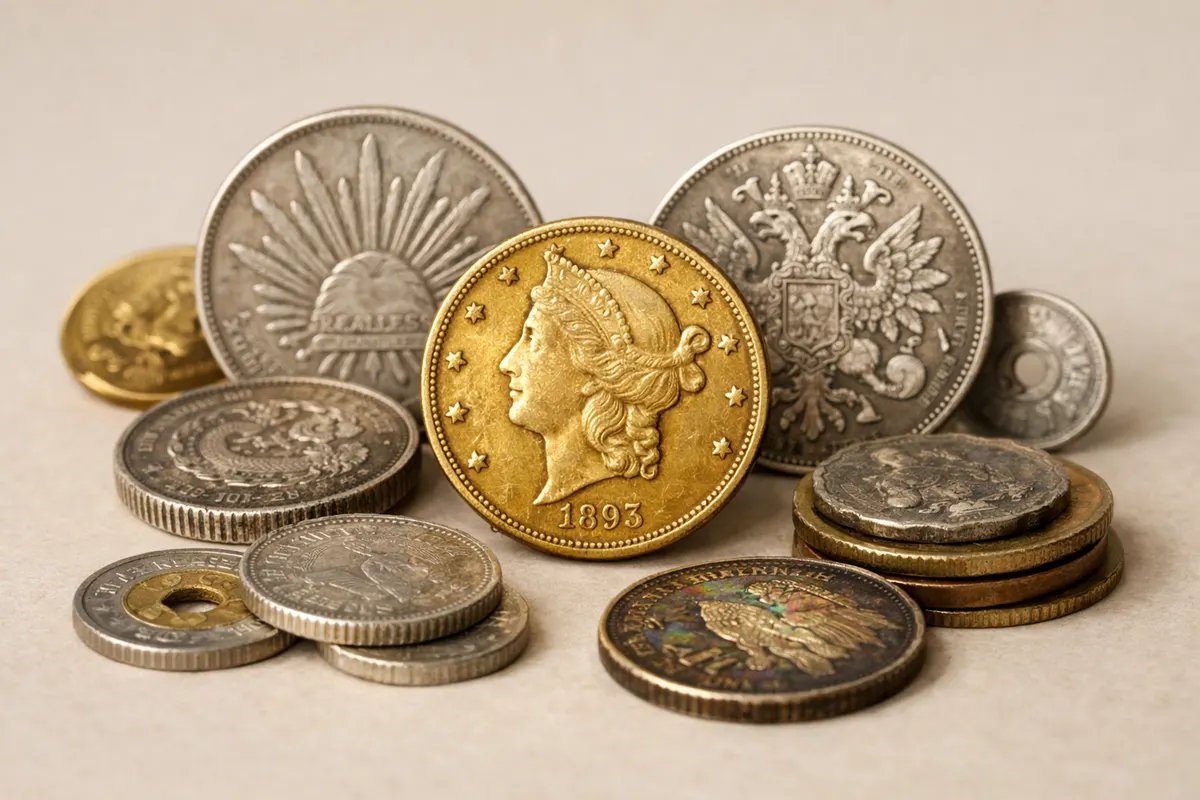
How identification works
Step 1
Snap a photo
Take a clear, well-lit photo of your item in the Coin Identifier - Coinora app.
Step 2
Get an instant identification
The app reads the visible clues and returns the closest matches in seconds.
Step 3
Review the details
Compare the result with your photo, review any uncertainty, and check the suggested next steps.
Key visual signals to check on foreign coins
When examining valuable foreign coins by eye, prioritize signals that photos and a few simple tools can confirm. Color and luster give a first hint of composition (silver tone vs. copper-nickel vs. brass), but plating and wear can mimic rarer metals, so treat color as suggestive, not conclusive.
Edge and rim details are especially diagnostic. Look for reeding, lettering, interrupted edges, or a milled seam on bi-metal coins; these features are hard to fake convincingly in low-quality reproductions. Include a close-up of the coin’s edge in your photos to help digital identification tools and experts compare patterns.
Measure where possible. A digital caliper reading for diameter and a scale for weight let you cross-check the candidate type from a photo against published specifications. If the measurements deviate noticeably from reference values, the coin may be a different issue, a later restrike, or a plated example.
- Color and patina: silver-grey, yellow-brass, or reddish copper tones; look for inconsistent patches that suggest plating.
- Edge details: reeding, lettering, plain, or bi-metal seam; photograph edge close-up.
- High-relief or proof-like surfaces: sharp devices and mirror fields often indicate lower circulation and higher interest.
- Flaws and errors visible in photos: off-center strikes, doubled dies, and clipped planchets.
- Measurement checks: diameter and weight to cross-check against candidate types.
What a photo identification report includes for foreign coins
A useful photo-based result for valuable foreign coins lists the probable country, denomination family, visible date or date range, and any clear mint mark or special finish. The report should also state confidence levels and the key observable evidence behind each suggestion so you can judge how much follow-up is needed.
Expect the result to flag possible rarities or error varieties when visible traits match known examples. The report typically pairs each observation with suggested next checks: weigh the coin, measure diameter, inspect the edge, or request a specialist opinion when provenance matters.
Remember the report cannot confirm metal composition from a single image. If the candidate appears silver and value hinges on silver content, a non-destructive assay or specific gravity check is the right next step. The identification will note this limitation and recommend those checks where relevant.
- Item type and probable country and denomination.
- Visible era, date range, and mint marks with confidence notes.
- Noted visual rarities or error indicators and example matches.
- Suggested follow-up checks: weight, diameter, magnet test, and provenance review.
- Care and handling notes for fragile high-relief or proof-like surfaces.
Items commonly mistaken for valuable foreign coins
Collectors often mistake plated modern tokens, fantasy issues, and circulated commemoratives for genuine high-value foreign coins. A photo can usually detect plated pieces by inconsistent toning or abrupt color changes at worn high points, while fantasy pieces often have modern tooling marks and generic motifs.
Modern commemoratives and circulation commemorative series sometimes resemble scarce older issues at a glance. Close-up photos of mint marks, full-date images, and a visible edge pattern typically reveal the modern origin or confirm an older strike.
Another frequent confusion is with restrikes and replicas. These can match design elements but differ in metal, weight, or edge inscription. A comparison photo showing the edge and a calibrated ruler in frame helps the identifier separate lookalikes from likely originals.
- Plated copies vs. silver originals: look for color breakthrough at wear points.
- Commemorative modern coins that mimic classic designs: check full date and mint mark.
- Restrikes and replicas: measure weight and diameter to spot inconsistencies.
- Base-metal tokens and medals: lack of denomination and different edge finishing are tell-tale.
Frequently asked questions
Are valuable mexican coins easy to identify from photos if the date is worn?
Photos can still reveal design elements and mint marks that narrow Mexican coin types even when the date is worn. Look for portrait style, legend lettering, and edge type in close-up photos. If the date is unreadable, pairing images with weight and diameter measurements sharply improves accuracy and helps rule out plated or reproduction pieces.
How should I treat a photo result that suggests rare 2 euro coins in my pocket change?
Treat a photo-based suggestion of rare 2 euro coins as a prioritized lead: examine the edge lettering, national side design, and any visible date. Many modern commemorative 2 euro issues are common; confirm with weight and a clear image of both sides. If measurements and edge lettering match reference data, consider specialist verification before assuming monetary value.
What should I do if I think I found rare 50p coins from a blurry phone image?
Start by re-photographing both faces and the edge with a ruler for scale; rare 50p coins often have distinctive shapes, lettering, or commemorative motifs that a better photo will show. If the improved images match known varieties, follow up with weight and diameter checks and seek a second opinion from a specialist, because photos alone cannot confirm composition or provenance.
Can I tell from a photo whether rare canadian coins worth money are actually valuable?
A photo can identify candidate rare Canadian coins and visible error types, but it cannot prove market value. Photographs help by matching design, mint marks, and condition to reference examples; however, final value depends on verified composition, exact grade, and provenance. Use the photo result to prioritize further checks like weight, diameter, and a professional appraisal if the coin appears scarce.
Related guides
Get a first-pass ID with Coin Identifier - Coinora
Use Coin Identifier - Coinora to turn your photos into a prioritized identification and follow-up checklist. The app highlights the observed clues (country, denomination family, visible mint marks, and error signs) and lists the next tests you should run to reduce uncertainty. Visit https://coin-identifier.app/tools/foreign-coin-identifier to start a clear first pass — remember that a photo-based result is a fast triage, not a definitive appraisal, so follow the suggested checks for composition and provenance.