
Coin Identification
1943 Copper Penny: How to Identify It and What It’s Worth
Clear, photo-checkable guidance on the 1943 copper penny: how to spot visible clues, common lookalikes, and realistic resale ranges before seeking verification.
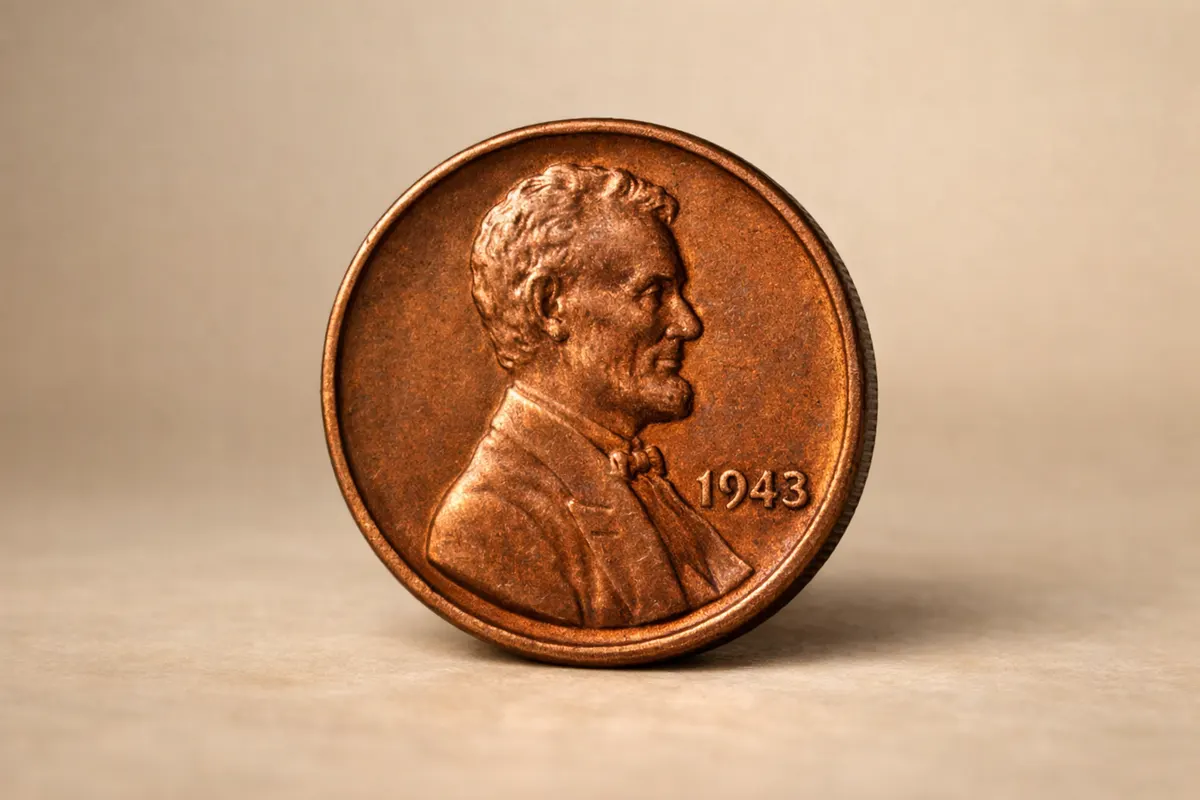
What the 1943 copper penny is and why it matters
A 1943 copper penny refers to a Lincoln cent struck on bronze (copper-based) planchets in 1943 instead of the standard zinc-coated steel planchets produced that year. The U.S. Mint switched to steel for most cents in 1943 to conserve copper for wartime needs, so surviving 1943-dated bronze pieces are outliers that draw attention because they contradict the mass-produced steel issue.
Because the normal 1943 cent was steel, a genuinely bronze 1943 coin indicates either a rare minting anomaly, a clerical mix-up at production, or an altered/contrived object. That rarity is why collectors and dealers scrutinize every visible detail before treating a piece as a true 1943 bronze cent.
Read the obverse and reverse together: check the date, mintmark, the state of the fields and devices, and how the metal behaves under light. When wear obscures the digits or devices, photographic evidence alone can be inconclusive; provenance and third-party certification become important.
How can you tell a 1943 copper penny from photos?
Start with basic photo checks that are reliable at a glance: overall color and reflectivity, wear patterns on Lincoln’s cheek and the wheat/garden elements, the sharpness of the date, and any signs of plating or alterations. Compare obverse and reverse tones under the same light—true bronze has a warm, yellow-brown hue and a different way of patinating than steel.
Look closely at edges and the rim. Bronze planchets and steel planchets take different strike details; a true bronze 1943 may show crisper devices where a steel cent would show different strike character. Also note whether the fields have fine pitting or flaking that suggests a plated steel core beneath a copper coat.
When a single photo leaves doubt, systematic visual checks help prioritize next steps. Below are photo-checkable clues commonly used by collectors and sellers.
- Color and tone: warm bronze vs. bluish-gray steel under the same light
- Date clarity: readable '1943' digits with consistent wear across the coin
- Edge inspection: no seam or abrupt color change where copper plating would meet a steel core
- Device detail: look for crispness in Lincoln’s bust and the reverse wreath that matches genuine bronze strikes
- magnet test 1943 penny — seen in a photo of the test setup? A true bronze piece will not attract a magnet; a visibly magnetic coin or photos showing the magnet being held to the coin suggest steel or a plated core
Key facts and quick specs for the 1943 copper penny
The table below summarizes the physical and visual attributes you should check in a photo. These rows pair the expected characteristics of a bronze planchet with the photo clues that can be captured without lab equipment.
When any of the expected specs conflict with the visual evidence—especially composition vs. photo tone—plan a next step such as a magnet check in hand, professional imaging, or third-party grading.
| Attribute | Expected for a bronze 1943 copper penny | Photo-checkable clue |
|---|---|---|
| Composition | Approx. 95% copper, 5% tin/zinc (pre-1944 bronze alloy) | Warm brown color, satiny luster; no metallic bluish sheen |
| Weight | About 3.11 grams (typical Lincoln cent weight) | Hard to confirm by photo; look for proportional thickness and wear |
| Diameter | 19.05 mm | Visible rim proportions and device size compared with known references |
| Obverse details | Lincoln portrait, clear date '1943', mintmark if present | Date legibility and consistent wear on Lincoln’s chin and cheek |
| Reverse design | Wheat ears (Lincoln wheat reverse) with fine detail | Sharpness of the wheat lines and inner field behavior |
| Magnetic behavior | Non-magnetic (bronze) | Photos showing interaction with a magnet are strong evidence |
What the 1943 copper penny is typically worth
Values for items presented as 1943 copper pennies vary wildly because the overwhelming majority of 1943-dated cents are steel; a coin must be authenticated as a genuine bronze strike to command collector prices. The table below frames typical secondhand resale tiers and the factors that most influence realized prices.
Treat any single photo-based estimate as provisional. Provenance, third-party certification (grading and attribution), and clear evidence that the coin is full bronze rather than plated or altered are the main value drivers.
| Tier | Typical resale range (secondhand) | What drives value |
|---|---|---|
| Altered, plated, or replicated pieces | $5–$200 | Visible plating, seams, or clear signs of alteration; buyer sees novelty rather than a genuine mint error |
| Unattributed but visually promising pieces | $500–$20,000 | Photographs that show bronze tone and no obvious plating but lack provenance or certification |
| Authenticated genuine bronze (certified, circulated) | $10,000–$250,000 | Third-party grading, consistent alloy tests or XRF results, and proven chain of custody |
| Top certified examples with strong provenance | $100,000–$1,000,000+ | Exceptional condition, firm auction record, museum or dealer documentation |
Coins commonly confused with a 1943 copper penny
The most frequent mistaken identities are the standard 1943 steel cent and various plated or altered pieces that mimic bronze. Visual red flags include uneven coloring at the rim, signs of plating flaking, and magnetic attraction. When possible, compare suspect photos against known 1943 steel examples to spot differences in texture and reflectivity.
Another common confusion is earlier bronze cents (for example late 1942 bronze cents) that were later cleaned or retoned to resemble a 1943 bronze piece. Look for date wear and matching device wear across the coin; mismatched wear is often a sign of tampering.
For a focused comparison with the year’s prevalent steel issue, see the site's reference on the 1943 steel penny: https://coin-identifier.app/wiki/1943-steel-penny.
Care and handling for a suspected 1943 copper penny
Minimize handling until identification is confirmed. Finger oils, cleaning attempts, or adhesive labels can permanently alter surface evidence that specialists use to authenticate a coin. Use gloves or hold the coin by its rim if you need to examine it in hand.
Avoid chemical cleaning, harsh abrasives, or home electrochemical tricks intended to 'reveal' color—these treatments commonly leave telltale residues and reduce collectible value. If you must clean for photography, use only gentle, dry dusting with a soft brush and capture images from multiple angles in neutral light.
If you suspect the coin may be genuine, photograph both sides, the edge, and any visible mintmark area at high resolution. Good photos speed up expert review and help tools that compare your images against known examples.
Frequently asked questions
1943 copper penny value: What can I reasonably expect if I sell a coin I think is a 1943 copper penny?
Expect a wide range. If a coin is proven altered or plated it will typically sell for under a few hundred dollars; unattributed but visually promising pieces can sell for thousands to tens of thousands; authenticated, certified genuine bronze 1943 cents have realized six-figure sums at auction. Always seek third-party grading and provenance before relying on a photograph-based value estimate.
Can a photo alone confirm that a 1943 dated cent is made of bronze?
A clear photo can strongly indicate bronze—through consistent warm tone, lack of bluish-gray steel color, and no visible plating seam—but it cannot definitively prove composition. A magnet test, alloy analysis, or third-party certification is required to confirm material; a photo is a useful first filter but not conclusive.
How likely is a genuine 1943 bronze cent compared with a misidentified or altered coin?
Genuine 1943 bronze cents are extremely rare relative to the mass-produced steel cents of 1943. Most coins presented as bronze are either plated or altered steel, or are earlier bronze cents with date tampering. Treat a photographic claim with skepticism and follow up with a physical magnet check or professional assessment.
What follow-up checks should I do after initial photo review?
Start with non-destructive, simple checks: a magnet test in hand (bronze is non-magnetic), high-resolution photos of the edge and rim, and comparison with verified 1943 steel examples. If results remain ambiguous, seek a reputable dealer or third-party grading service for alloy testing or authoritative attribution.
Related guides
Compare your photo against 1943 copper penny clues
If your photos show promising bronze tone or you have a magnet test result, use Coin Identifier - Coinora as a first-pass comparison tool to match your images against the visual clues listed here. Treat the tool as an evidence-check, not a final valuation or authentication step. For a closer look, visit the free coin identifier tool: https://coin-identifier.app/tools/free-coin-identifier.
Take the next step →