
Coin Identification
1943 Steel Penny: Identification, Value, and Real Examples
A concise field guide to the 1943 steel penny: what it is, visible ID clues a photo can show, realistic resale ranges, and common lookalikes to watch for.
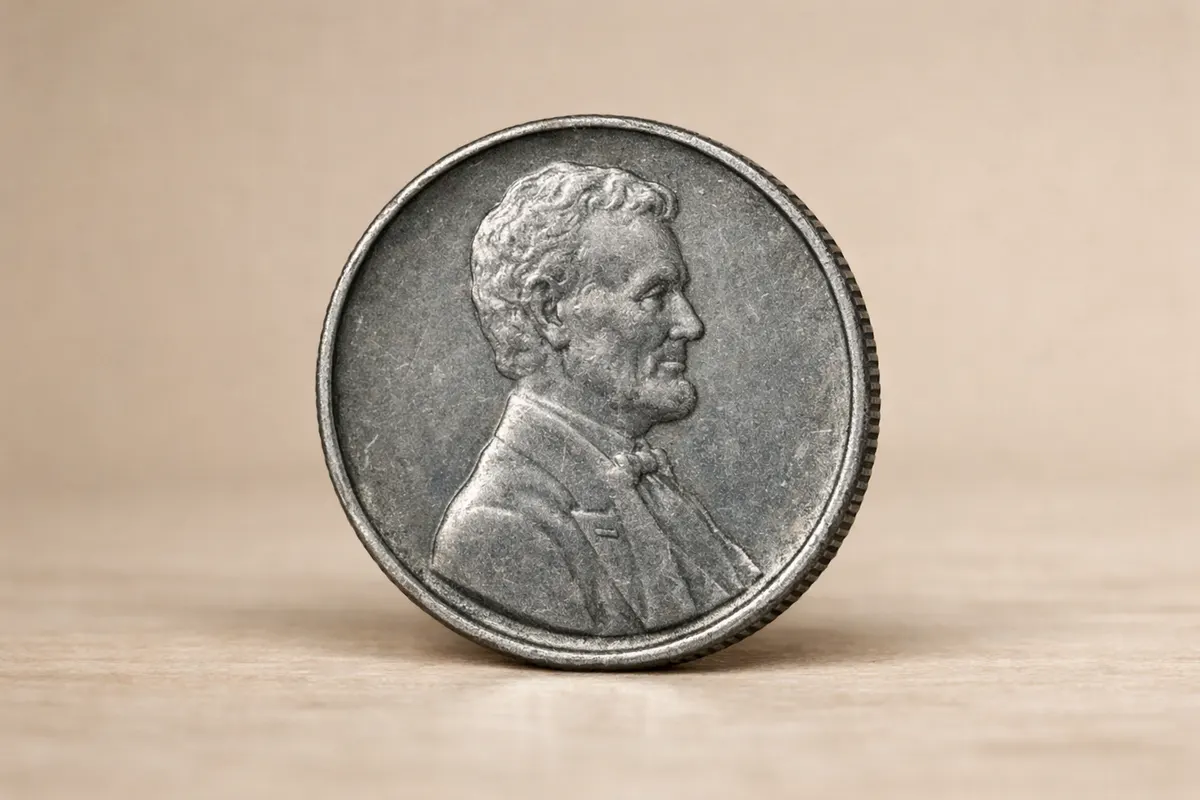
What the 1943 steel penny is and why it was made
The 1943 steel penny is the U.S. Lincoln cent struck on zinc-coated steel planchets instead of the usual bronze. The change came because copper was needed for wartime munitions during World War II, so the U.S. Mint produced steel cents for circulation in 1943 only (most were made at Philadelphia; some at San Francisco and Denver had mint marks).
Because the planchet was steel with a zinc coating, the coin looks silver-gray, is magnetic, and handles differently under wear than bronze cents. Design elements — portrait of Lincoln on the obverse and wheat ears on the reverse for 1943 cents — remain the same as other Lincoln wheat cents, so the date and design location are primary visual clues.
The 1943 steel cent is a common, well-documented series: most surviving examples are modern-circulation worn pieces worth modest sums, while a handful of rare variants and mint errors command much higher interest. Knowing the metal and visible date is the starting point for any photo-based check.
- Composition: zinc-coated steel (magnetic, silver-gray)
- Date and design: Lincoln obverse, wheat reverse like other wheat cents
- Production context: copper shortage in 1943 led to steel planchets
How can you tell a 1943 steel penny from photos and quick checks?
Photos can show many reliable clues for a 1943 steel penny, but some tests require handling. In an image, look first for the date digits, Lincoln's profile and the wheat reverse design. If the date reads 1943 and the coin appears silver-gray rather than reddish-brown, that combination is consistent with a steel cent.
Surface color and texture are strong photo clues: steel cents have a flat silver tone that develops spotting or light rust over time where the zinc coating wears. Bronze 1943 cents are extremely rare and will show a copper tone; if a photo shows a true copper color with a 1943 date, that raises a red flag for a genuine rarity or a post-mint alteration.
Magnets, weight, and edge checks require the coin in hand. A magnet that sticks to the coin strongly suggests the steel composition. A scale that measures about 2.7 grams (the standard steel cent weight) also supports the ID — but photos cannot prove weight, so use images for preliminary sorting only.
- how to tell if a 1943 steel penny is real
- Photo clue: silver-gray field with wheat reverse and clear 1943 date
- Edge and rim: look for machine-struck rim that matches Lincoln wheat cents
- Surface behavior: flaking zinc or rust spotting on worn areas is common
- Mint mark location: a clear mint mark on the obverse under the date helps confirm origin
1943 steel penny — key facts and attributes
This compact specs table lists the attributes most useful for verification and quick comparison. Use images that include the obverse, reverse, and an oblique rim view when possible; those angles show date clarity, mint marks, and edge condition without needing a scale or magnet.
Because the metal is steel with a zinc coating, visual and magnetic cues are the fastest photo-checkable signals; weight and metallurgical assays require physical access or professional testing.
| Attribute | 1943 Lincoln Steel Cent (typical) | Notes |
|---|---|---|
| Composition | Zinc-coated steel | Magnetic; silver-gray; prone to zinc wear and light rust |
| Weight | ≈ 2.7 g | Photos can’t show weight — use this value when you can weigh the piece |
| Diameter | 19.05 mm | Same diameter as other Lincoln cents of the era |
| Edge | Plain | Smooth, machine-struck rim; look for consistent strike with date |
| Design | Lincoln obverse / Wheat reverse | Same dies as other wheat cents; date placement identical |
| Mint marks | Usually none (P), D, or S | Mint mark under date on obverse — clear photos help confirm |
1943 steel penny value
Resale values for 1943 steel cents vary widely depending on condition and rarity. Most circulated examples trade for modest amounts in secondhand markets; uncirculated grades, rare error pieces, or authenticated 1943 bronze cents (a separate and extremely rare category) can push values much higher. Use online sale histories and recent auction results as a reality check rather than relying on a single image.
The table below gives broad tiers and the main drivers collectors use when pricing: grade (wear), eye appeal (surface defects or toning), and documented authenticity for any claimed exotic variant. Avoid treating any single photo as a complete appraisal — photographs can miss cleaning, plating, or repairs that alter market value.
| Tier | Typical resale range (circulation) | What drives value |
|---|---|---|
| Heavily worn/common | $0.10 - $3 | Circulated condition, visible date, common surfaces |
| Collector circulated to XF | $3 - $30 | Better strike, eye appeal, minimal rust or pitting |
| Uncirculated/MS | $30 - $300+ | Original luster, strong strike; higher grades command premiums |
| Error/Rare variants | $100s to $10,000+ | Struck-on-broken-die errors, major mint anomalies, or authenticated unusual compositions |
- Typical drivers: grade (wear), originality of surface, documented provenance for rare variants
- Market note: sale prices fluctuate; seller photos and condition reports matter
- When in doubt, get a physical inspection or third-party authentication
Lookalikes: what 1943 steel pennies are mistaken for
Several coins and altered pieces are commonly mistaken for 1943 steel cents in photos. The most frequent confusions are later plated tokens, copper-toned pieces that are actually bronze but dated 1943 (a genuine 1943 bronze cent is extraordinarily rare), and modern novelty items with fake dates or plated finishes.
Photos often hide post-mint alterations like copper plating over steel or surface treatments meant to simulate age. Look for tell-tale signs: inconsistent color around raised devices, abrupt changes at the rim, or unusual tooling marks near the date numerals.
When a photo shows a copper-looking 1943 date, it can signal either a genuine error (very rare) or a plated/altered coin. A clear oblique rim shot and close-up of the date and mint mark are the best single-photo angles to catch plating seams or re-dates.
- 1943 bronze cent (genuine examples are extremely rare and require expert authentication)
- Copper-plated steel fakes: plating often wears or chips at high points
- Modern tokens or foreign coins with similar size and color
- Altered dates: retooled numerals or filled/recut digits visible under magnification
- For related mint-mark or wear traps on wheat-era cents, see Wheat Penny Errors: Mint Marks, Doubled Dies, and Wear Clues (https://coin-identifier.app/blog/wheat-penny-errors)
Care and handling for a 1943 steel penny
Avoid cleaning a 1943 steel penny with abrasives or chemicals — that will usually reduce collector value. Light finger oils and household contaminants can accelerate zinc wear or spotting, so handle coins by the edges or use soft cotton gloves if you expect to photograph them for identification.
Store steel cents in dry, stable conditions: low humidity and inert holders (Mylar flips or acid-free envelopes) reduce active corrosion. If you see active rust (red oxides), isolate the coin and consult a conservator before attempting any corrective treatment.
For preliminary checks at home, a small refrigerator magnet and a digital kitchen scale are inexpensive tools that help validate photo-based suspicions, but remember that neither test replaces professional authentication when rare variants are claimed.
- Handle by edges; avoid touching fields and devices
- Do not clean or polish—natural surfaces are preferred by collectors
- Use dry, inert storage to slow zinc corrosion and spotting
Frequently asked questions
How to tell if a 1943 steel penny is real from a phone photo?
From a phone photo, check for a clear 1943 date, the Lincoln obverse and wheat reverse, a consistent silver-gray zinc finish, and any visible mint mark. Close-up oblique shots of the rim and date area help reveal plating seams or retooling. Because photos can’t show magnetism or weight, treat an image as a first-pass assessment and seek physical checks for confirmation.
Could a 1943 penny that looks copper in a picture be genuine bronze?
A copper-looking 1943 date could be one of three things: a genuine and extremely rare 1943 bronze specimen (needs full expert verification), a steel cent that has been plated or altered, or lighting/color cast in the photo. If the coin appears copper in images, capture high-resolution close-ups of the date, rim, and reverse and arrange a hands-on test (magnet and weight) or third-party authentication.
What outward signs should I include when documenting a 1943 steel penny for sale or appraisal?
Photograph the obverse and reverse flat, plus an oblique rim view showing the date/mint mark, and a high-resolution close-up of any unusual marks or errors. Note visible issues like rust, corrosion, or cleaned surfaces in your description. Accurate condition notes and clear images of the date area reduce uncertainty for buyers and graders.
Is there a quick value estimate I can trust from a single photo of a 1943 steel penny?
No single photo should be treated as a definitive appraisal. A clear image helps place the coin into a broad tier (common circulated, better grade, uncirculated, or possible error), but value depends on grade, originality of surface, and verification of any claimed rarity. Use photos to triage items — then verify weight, magnetism, and, if needed, third-party authentication for higher-value claims.
Related guides
Compare a photo of your coin with Coin Identifier - Coinora
Use the Coin Identifier - Coinora app on your phone to run a side-by-side comparison of your coin photos against the 1943 steel penny clues on this page. The app helps flag likely steel cents, obvious plating or alterations, and photo angles that reveal telling details — but it does not replace in-hand tests or professional authentication for rare variants. Start with a clear oblique rim shot, a close-up of the date, and the reverse when you launch the app.
Take the next step →