
Coin Identification
Buffalo Nickel: Identification, Value, and Real Examples
Learn which Buffalo Nickel details a photo can confirm, the visual clues to check, and realistic resale ranges before you seek a formal appraisal.
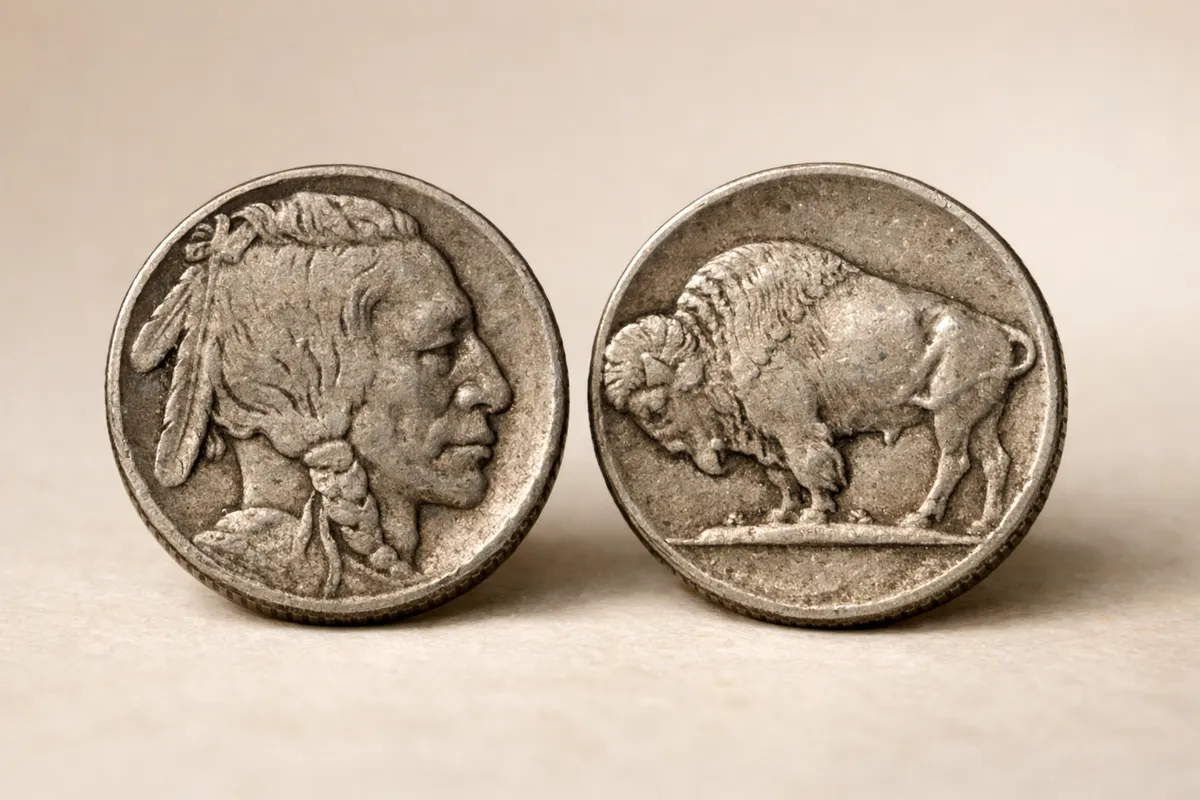
What a Buffalo nickel is and why it matters
A Buffalo nickel is a United States five-cent coin struck from 1913 to 1938 that features an American bison on the reverse and a Native American profile on the obverse. Made primarily from a copper–nickel alloy rather than the earlier silver used on older coins, this design — often called the Indian Head or Buffalo nickel — is a popular collectible because of its distinctive art and a wide range of surviving conditions.
The coin’s composition and date range affect both how it looks in photos and what it’s typically worth. Most circulating examples show heavy wear on high points: the buffalo’s shoulder and the Native American’s cheekbone and hair details lose definition first. Those wear patterns are key to telling an authentic struck Buffalo nickel from modern tokens or cast copies.
Collectors and casual finders both examine Buffalo nickels for three practical reasons: the date and mint mark (which determine rarity), the condition or grade (how much original detail remains), and any unusual die errors or varieties that can raise resale interest. A clear photo that captures the obverse, reverse, and rim can answer many preliminary questions, but a single image rarely provides a final authentication or appraisal.
- Primary composition: 75% copper, 25% nickel (solid planchet, not silver).
- Common date range on genuine issues: 1913–1938; some series varieties and overdates exist.
- High-wear areas to photograph: buffalo shoulder and tail, obverse cheek and hairlines.
How can you tell a coin is a Buffalo nickel from photos?
Photographs are useful for spotting the design, wear patterns, and obvious damage, but they have limits. Start with three photos: an obverse close-up centered on the Native American profile, a reverse close-up of the bison, and a rim-to-rim shot that shows the edge and any raised lettering. Lighting at a shallow angle reveals surface relief and wear; diffuse, even light reduces glare that hides fine details.
Key photo-checkable signals include the shape of the bison’s hump and tail, the positioning and style of the legend UNITED·STATES·OF·AMERICA and E PLURIBUS UNUM, and the five-cent denomination legend. On the obverse, look for the hair strands and the placement of the motto IN GOD WE TRUST — those are design traits that counterfeit or novelty pieces often fail to replicate accurately.
Pay particular attention to weight and thickness only as supporting evidence: Buffalo nickels weigh about 5 grams and have a smooth (plain) edge. While you can’t weigh a coin from a photo, photographing it next to a ruler or placing it on a printed scale reference helps a remote expert judge size. Also inspect the date area carefully: many Buffalo nickels have partially or fully worn dates, and the transition from readable to unreadable numbers tells you about strike strength and circulation history.
When a coin shows odd tool marks, bubbling on the surface, or suspicious seam lines in macro photos, treat those as red flags suggesting casting or alteration rather than a struck Buffalo nickel. Use a loupe or macro photo to check for consistently struck design elements versus uneven casting textures.
- Take three photos: obverse, reverse, and rim-to-rim edge.
- Look for design specifics: bison hump shape, tail placement, and lettering style.
- Check high points for wear: buffalo shoulder and obverse hairlines lose detail first.
- Use scale reference in photos to help estimate diameter and thickness when weight can’t be measured.
Key facts and technical specs for Buffalo nickel
This compact table covers the attributes most useful for photo-based identification and quick attribution. These facts are consistent across regular-issue Buffalo nickels and help separate them from lookalikes or modern novelty pieces.
If the date is worn so badly you can’t read it, consult focused resources about worn dates and mint marks to narrow possibilities; the companion article Buffalo Nickel Dates: Worn Date Clues and Mint Marks walks through date-style changes that are visible even on worn coins.
| Attribute | Typical Buffalo Nickel | Why it matters |
|---|---|---|
| Composition | 75% copper, 25% nickel (clad) | Different from earlier silver nickels; surface color and wear patterns reflect alloy. |
| Weight & diameter | ~5.0 grams; ~21.2 mm diameter | Helps rule out tokens and foreign coins when size is photographed to scale. |
| Edge | Plain, smooth | Edge detail rules out re-engraved or cast copies with seam lines. |
| Years struck | 1913–1938 (regular issue) | Date narrows rarity; some years/mints are key dates for collectors. |
| Designer | James Earle Fraser | Design traits (bison pose, hair treatment) are identification anchors. |
| Common marks | Date on obverse; mint mark on reverse under mound (later years) | Location of mint mark helps identify San Francisco, Denver, or Philadelphia issues. |
- Composition and weight help rule out silver or plated copies when you can measure or compare size in photos.
- Designer and year range offer context for varieties and known rare issues; these are mentioned in the table below.
Buffalo nickel value: resale tiers and what affects price
Photographs can support a realistic secondhand-market estimate, but they cannot replace hands-on grading or provenance checks. The table below shows typical resale tiers and the main drivers behind each range; use these as ballpark guidance rather than firm valuations. Condition, date/mint, and any clear die errors are the largest determinants of resale interest.
Minor circulation wear typically keeps most Buffalo nickels in modest resale tiers; coins with full detail (“full steps” on the bison’s leg and tail) or unrestored surfaces command higher prices. Conversely, holes, cleaning, or major rim nicks reduce buyer interest sharply even if the date is desirable.
Extra caution is warranted for coins that show unusual markings or suspect surfaces in photos: these may be altered, plated, or counterfeit. If a coin appears to be a high-value date or in exceptional condition, seek an in-hand evaluation from a reputable dealer or third-party grading service rather than relying on a single photo-based estimate.
| Tier | Typical resale range | What drives price |
|---|---|---|
| Heavily worn, common dates | About $0.50–$5 | Extensive wear and common dates; mainly novelty or bulk lots. |
| Moderately circulated, readable date | About $5–$40 | Good detail on design elements and readable date increase collector interest. |
| High-grade circulated to AU (almost uncirculated) | About $40–$200 | Strong relief, minimal wear, and strong strike raise market value. |
| Uncirculated / Mint State (MS) | $200–$2,000+ | Original luster, no wear; higher grades and attractive surfaces fetch premiums. |
| Key dates and rare varieties | $500–$100,000+ depending on rarity | Scarce mint/year, verified die varieties, or certified condition drive top prices. |
- Condition (wear, corrosion, cleaning) is the primary price driver for ordinary dates.
- Date and mint mark (including rare issues) create the largest jumps between tiers.
- Errors and full-strike details can significantly increase demand among collectors.
Coins and tokens Buffalo nickels are often mistaken for
A few U.S. and foreign coins, plus novelty tokens, can be confused with Buffalo nickels in low-resolution photos. The tell-tale differences are almost always visible under magnification or with side-lit photos that reveal relief and edge detail.
Common lookalikes include cast novelty “buffalo” rounds, foreign coins with a bison motif, and modern commemorative pieces that mimic the Indian Head design. These items often show casting seams, inconsistent lettering, or a heavier-than-expected thickness that photography can reveal.
Another frequent confusion arises when the date has worn away: a worn 1913–1920 Buffalo nickel can resemble a later rough-circulated foreign coin at a glance. In such cases, check for the standard US legends (UNITED STATES OF AMERICA, E PLURIBUS UNUM, and FIVE CENTS) and the plain edge — these details typically expose non-U.S. or novelty issues.
- Cast copies: look for seam lines, pitted surfaces, or identical sprue marks in macro photos.
- Foreign bison coins: compare lettering language and denomination legend to confirm origin.
- Commemorative or fantasy pieces: these may have different metal color, thicker planchets, or reinterpreted portraits.
Care and handling for Buffalo nickels found in collections
Avoid aggressive cleaning or polishing. Many collectors and buyers prefer original surfaces, even when darkened by circulation toning; abrasive cleaning can remove detail and lower the coin’s market value. If you must remove surface dirt, use gentle dry brushing or consult a conservator experienced with copper-nickel coins.
Store Buffalo nickels in dry, stable conditions away from PVC-containing plastics that can cause long-term damage. For long-term storage, inert coin holders, acid-free flips, or archival-grade coin envelopes are the safest options. Handle coins by the edges and avoid touching faces to keep oils from fingers off the fields.
If you plan to sell or submit a coin for grading, photograph it before doing any cleaning so you preserve the original condition record. A clear photo record also helps buyers judge potential restoration or conservation needs and avoids disputes about alteration after sale.
- Never use abrasive cloths or chemical dips on collectible Buffalo nickels.
- Handle by the rim and store in inert holders to avoid chemical damage.
- Photograph coins before any conservation so you keep an unchanged visual record.
Frequently asked questions
What should I know if I find a buffalo nickel with no date?
A buffalo nickel with no date is usually a heavily worn circulation survivor — the high points where numbers sit wear first. First, examine the shape and remaining strokes where the date would be; lighting at an oblique angle can reveal faint numerals. Compare the letter forms and remaining digits on the obverse to known year-style charts (some years used different numeral shapes). If the date remains unreadable, estimate rarity by condition and consult specialists or a focused reference like Buffalo Nickel Dates: Worn Date Clues and Mint Marks for clues that survive heavy wear.
Can I confirm a Buffalo nickel is authentic from photos alone?
Photos are an excellent first pass but rarely provide absolute confirmation. High-quality, well-lit macro photos can reveal surface texture, lettering style, and tool marks that suggest casting or alteration, but in-person checks — weight, thickness, and loupe inspection of die breaks or planchet anomalies — are required for definitive authentication. Treat photo identifications as provisional and escalate to a trusted dealer or grading service for high-value pieces.
How should I photograph a Buffalo nickel to help estimate condition and date?
Use three consistent views: obverse, reverse, and an edge-to-edge shot; include a scale reference like a ruler. Light from a low angle (raking light) highlights relief and wear; diffuse overhead light can show luster and surface color. Take macro shots of the date area and the bison’s hind leg (for “full steps”), and avoid harsh flash that creates glare and hides fine details. Label or timestamp photos so you can track provenance if you later sell or verify the coin.
Should I clean a Buffalo nickel I found before trying to sell it?
No. Cleaning typically reduces collector value because it alters the original surface and may remove strike details. Mild surface dirt can sometimes be gently removed with a soft brush, but avoid chemical dips, abrasives, or ultrasonic cleaners. Photograph the coin as found and, if in doubt, consult a dealer or conservator before taking any cleaning steps.
Related guides
Compare your coin photo with Coin Identifier - Coinora
Take a careful photo of your Buffalo nickel (obverse, reverse, and an edge-to-edge shot) and use Coin Identifier - Coinora on your iOS device as a first-pass comparison against the visual clues on this page. The app can help you match date styles, spot common lookalikes, and highlight visible die details worth a closer look. Remember: Coinora is a screening tool — it cannot certify authenticity or assign final value. For coins that appear rare or high-grade, follow up with an in-person evaluation from a reputable dealer or grading service.
Take the next step →