
Coin Identification
Wheat Penny: Identification, Value, and Real Examples
A practical photo guide to wheat penny identification, visible lookalikes, and cautious secondhand value ranges to expect in common conditions.
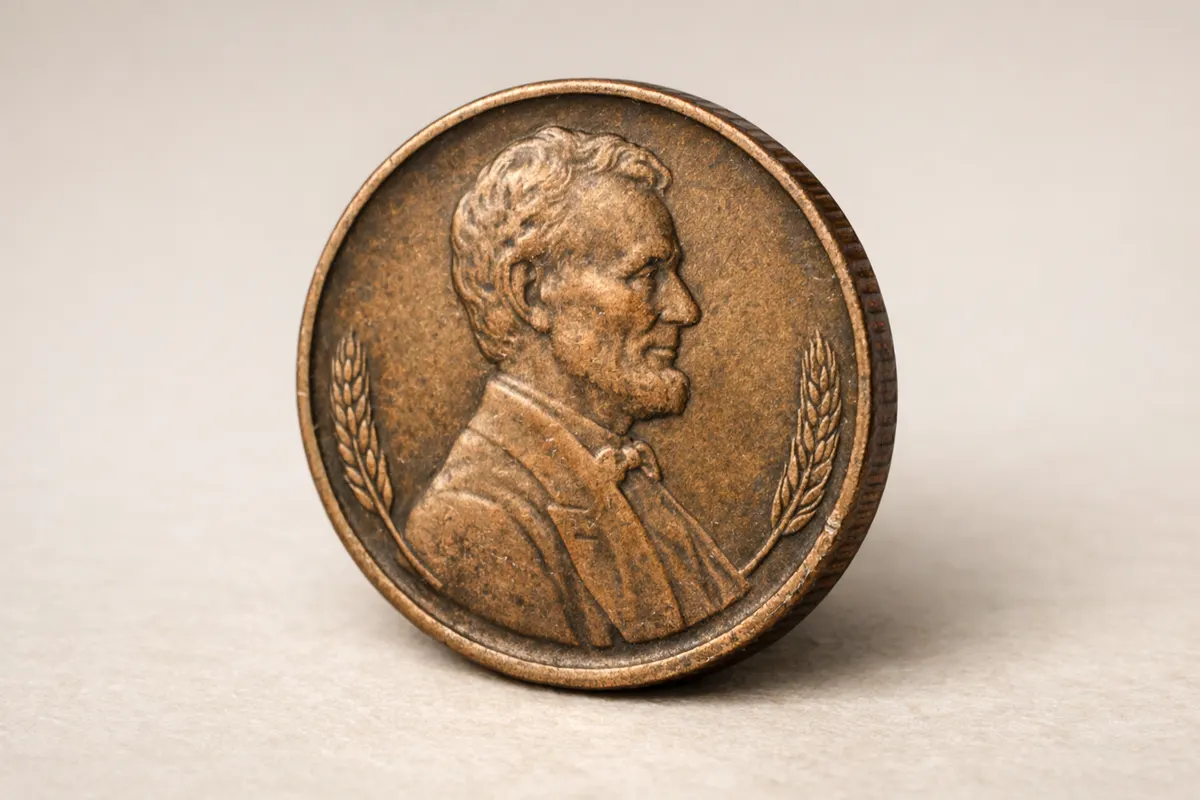
What a wheat penny is and why collectors care
A wheat penny is the common name for the Lincoln cent struck with wheat-ear reverse designs between 1909 and 1958. The obverse shows Abraham Lincoln; the reverse originally used two wheat ears framing the denomination, which is the design feature that gives the coin its informal name.
Most wheat pennies are 95% copper and 5% tin and zinc (except special wartime and experimental issues), have a plain edge, and weigh about 3.11 grams in their standard copper composition. The series is prized by collectors because it spans many dates and mint varieties where condition, mint mark, and errors can change value significantly.
In everyday use you’ll see wheat pennies as circulated Lincoln cents with brown or red-brown toning. Examples in higher grades, rare mint-mark/date combinations, or strong die varieties are what typically attract specialist interest; ordinary worn examples remain common in change and collectors’ bins.
- Date range: 1909–1958 (wheat reverse).
- Standard composition: ~95% copper (pre-1944, except 1943 steel example).
- Typical weight: ~3.11 g (copper cents).
- Rarest wheat penny: a few key dates and mint-mark combos (see identification section).
How can you tell a wheat penny from photos?
Start by checking the reverse: two parallel wheat stalks on either side of the denomination mean you’re looking at a wheat-back Lincoln cent. A clear photo of both sides, the rim, and the date area is the fastest way to confirm the type.
Next, read the date and mint mark. Even worn digits can often be enhanced by raking light (low-angle lighting) in photos. Key diagnostic years for collectors include 1909 (VDB), 1914-D, 1922 (no D), and 1931-S—these dates frequently change a coin’s market interest.
Surface color and weight cues matter: red-brown coloration suggests original copper toning; unusually light or silver-gray color can indicate a 1943 steel cent or a post-1982 zinc core with copper plating. Photo-check the edge and center for magnetic response if you can test the coin in hand—steel cents will be magnetic while copper ones won’t.
- Reverse design: two wheat stalks = wheat penny.
- Date and mint mark: key photo focus area—1909, 1914-D, 1922(no D), 1931-S matter most.
- Color clue: silver-gray may be 1943 steel; red/brown indicates copper.
- Rim and lettering: crisp rims and full lettering increase collector interest; wear patterns help grade the coin.
Key facts and quick specs for a wheat penny
This compact table lists the physical and identifying attributes you can check quickly from photos and routine in-hand tests. Use the weight and edge cues only when you can handle the coin; most photographers will rely on design, date, mint mark, and color.
| Attribute | Typical detail | Why it matters |
|---|---|---|
| Composition | ≈95% copper (standard); exceptions exist | Affects color, weight, and collector interest |
| Diameter & weight | 19.05 mm; ~3.11 g (copper) | Helps spot non-U.S. lookalikes or altered cores |
| Obverse & reverse | Lincoln obverse; wheat-ear reverse | Primary visual confirmation from photos |
| Edge | Plain | Confirms standard strike type |
| Common marks | Date, mint mark (D, S), VDB initials on 1909 | Key to identifying variants and rarities |
| Usual condition | Circulated brown to red-brown patina | Sets baseline for realistic resale expectations |
- Keep photos of both sides and a close-up of the date/mint mark for comparison.
- Raking light photos reveal details in worn digits; avoid heavy flash that washes out raised features.
wheat penny value: typical resale tiers
Values for wheat pennies vary widely depending on date, mint mark, condition, and errors. This section uses secondhand-market framing—what you might realistically see in coin shops, online listings, or auctions—rather than any guaranteed appraisal.
Common circulated wheat pennies from the 1910s–1950s in heavily worn condition are often worth only face value to a couple dollars to collectors. Key dates, high-grade uncirculated pieces, and error coins push that range much higher. Always treat a photo as a first-pass indicator: condition and provenance verification in hand usually change precise estimates.
| Tier | Typical resale range (USD) | What drives price |
|---|---|---|
| Common circulated | $0.05–$2 | Wear, scratched fields, common dates |
| Attractive AU/Uncirculated | $20–$150 | Strong strike, original color, minimal marks |
| Key-date mint rarities | $300–$5,000+ | 1909-S VDB, 1914-D, 1931-S in high grade |
| Error/variety special cases | $100–$50,000+ | Major doubled dies, incorrect planchets, authenticated errors |
| Exceptional collectors' pieces | High-end auction pricing | Top-grade survivors or with notable provenance |
- Typical circulated common dates: $0.05–$2 in most markets.
- High-grade common dates (MS60+): $20–$150 depending on eye appeal.
- Key dates and mint-mark rarities can start in the hundreds and climb into thousands.
- Errors and exceptional provenance may exceed typical tiers—specialist review advised.
Coins often mistaken for wheat pennies and how to tell
Several coins and modern cents can look similar in photos, and simple color cues sometimes mislead. The most frequent confusions include 1943 steel cents (shiny grey), post-1982 zinc-cored pennies with copper plating, and foreign one-cent sized coins that share diameter but not composition.
A 1943 steel cent, for example, is magnetic and silver-gray; a wheat penny should be non-magnetic unless it’s one of the steel experiments. Post-1982 zinc cents have a thin copper plating that often wears away at high points revealing a lighter core; photos showing two tones across a rim or near high points point to plated zinc rather than an original wheat composition.
- 1943 steel cent vs. copper wheat penny: magnet test or color in photo helps distinguish.
- Post-1982 zinc-plated pennies: look for core exposure at wear points.
- Foreign coins (size-similar): check lettering and country name on reverses.
- Wear patterns: wheat ears and rim lettering remain the fastest visual confirmers.
Care and handling for wheat pennies
Handle wheat pennies by the edges; oils from fingers accelerate corrosion and remove original red copper toning which can affect collectibility. When photographing coins, use soft light and a stable mount to avoid fingerprints and blur.
Avoid cleaning a coin to improve appearance: most cleaning reduces market value. If you believe a coin is potentially valuable, seek advice from a trusted numismatist or dealer before applying any chemicals or abrasive cleaning. For everyday storage, acid-free flips or inert plastic holders are recommended.
- Do not polish or chemically clean; cleaning often lowers value.
- Store in low-humidity, stable temperature conditions.
- Document provenance and images before any handling that might alter appearance.
Frequently asked questions
How do I estimate wheat penny value from a photo if I only have one image?
A photo can help you identify the date, mint mark, and basic condition, which narrow likely resale tiers, but it cannot replace in-hand grading. Share clear images of obverse, reverse, and the date area; note color (red/brown vs. gray), any visible doubling, and the mint mark. Use those clues to form a cautious range, then seek an in-person or specialist review for precise valuation.
When should I consider my coin among the valuable wheat pennies when I only have a smartphone picture?
If a photo clearly shows a rare date/mint combination (for example: 1909-S VDB, 1914-D, or 1931-S) or an obvious major error (large doubled die or wrong planchet), treat it as potentially valuable and escalate for specialist review. Smartphone photos help screen candidates, but final determination needs high-resolution images or inspection to confirm condition and authenticity.
Can a single photo tell me if I have the rarest wheat penny like a mis-struck or experimental piece?
A single photo can highlight unusual features that merit further investigation—off-center strikes, distinct planchet color, or obvious doubled designs—but it cannot prove rarity alone. The rarest wheat penny claims typically require die-study, provenance, and sometimes metallurgical tests; use photos to flag candidates rather than to finalize rarity claims.
Why does my wheat penny look silver-gray in images and could that affect the rarest wheat penny identification?
Silver-gray photos often indicate a 1943 steel cent or image lighting that flattens red copper tones. Because the 1943 steel issue is a historically distinct production, misreading color can lead you away from correct identification. If your photo shows a gray surface, check magnetism in hand and examine the date: 1943 steel cents are labeled 1943, while genuine copper wheat pennies from other years retain brown/red hues.
Related guides
Compare your coin photo with Coin Identifier - Coinora
Use Coin Identifier - Coinora on iOS as a practical first pass: take clear photos of obverse, reverse, and the date area, then compare them to the wheat penny clues here. The app helps highlight visible date, mint mark, and condition cues quickly; treat its results as a screening step and seek a specialist for any high-value or unusual coins.
Take the next step →