
Double Die Coin: Letter, Date, and Device Clues
Learn which visible details really indicate a double die coin, what a photo can and cannot prove, and the practical next steps to confirm a candidate.
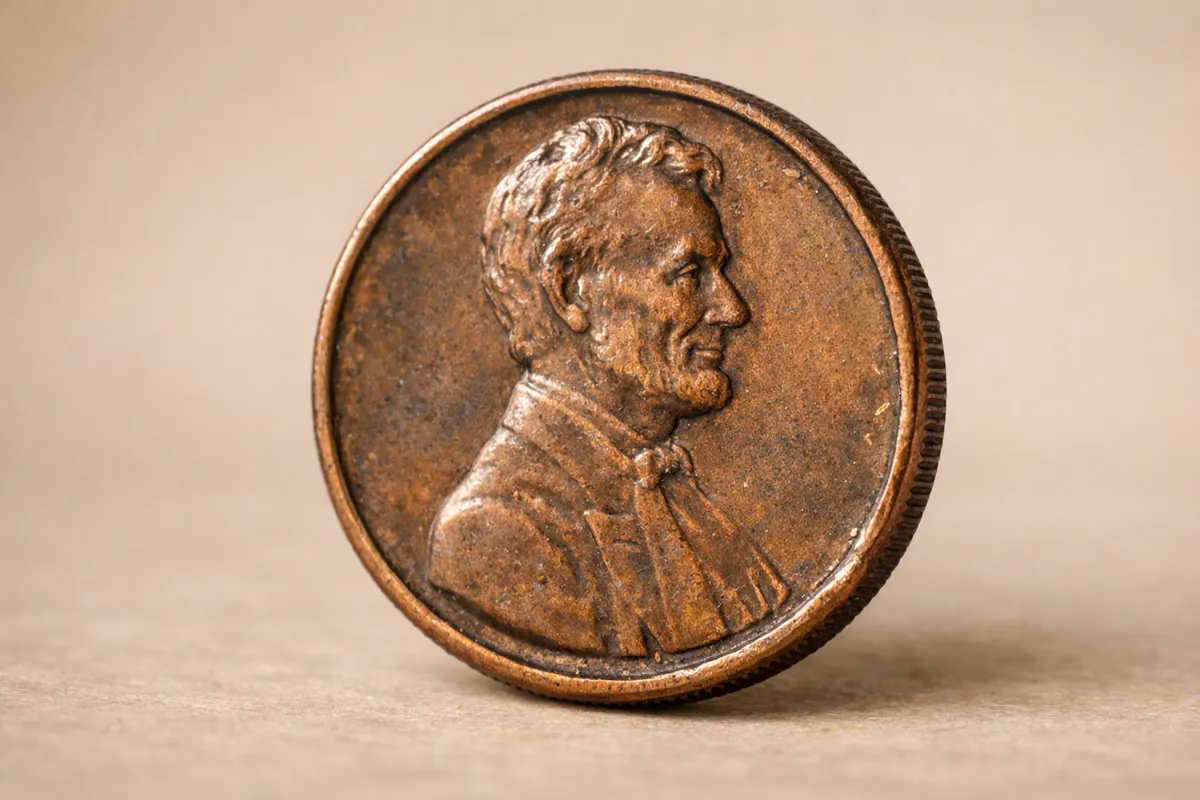
At a glance: what a photo can show for double die coin
A clear photo can reveal whether letters, numbers, or design elements appear doubled, but not every doubling you see is a true double die. The strongest photographic clues are separated, high-relief doubling on letters or date numerals where you can see complete secondary detail set off from the primary image.
True double die results from the die itself receiving two different impressions during hubbing; that creates fully formed duplicate features in the same plane of relief. In a phone photo, that shows as distinct, separated serifs, numerals, or device outlines that repeat with consistent offset across the affected area.
Photos cannot by themselves prove manufacturing provenance, value, or rarity. Lighting, angle, wear, and post-strike damage can imitate or hide doubling. Treat a single picture as a candidate flag: useful for narrowing the possibilities, but not a conclusive certificate of a double die coin.
- Most reliable: clear, separated doubling on raised letters, numerals, or central design elements.
- Helpful context: mint mark position, year digits, and which side (obverse/reverse) shows the effect.
- Not proof: glare, shelf-like echoes (machine doubling), or dirt that looks like a second image.
- Next step after a photo: collect multiple close-up images, note coin condition, and compare to documented examples.
Visual clues that matter most for double die coin
When judging a suspected double die coin from photos, prioritize clues that remain visible despite angle and lighting. The best signals are structural: fully formed duplicate strokes or numerals that preserve shape and inner detail. For example, a doubled serif on an R or the complete outline of a second 5 in a date that includes the same curvature and interior space are high-confidence clues.
Look for repetition across adjacent features. A true double die will often affect a block of letters or several date digits consistently because the die-hubbing error is transferred across a hub’s face. If multiple letters in a word show identical offset and identical duplicated details, that pattern strengthens the double-die interpretation.
Check the separation and overlap of the duplicated image. True doubled dies usually show a clean, sometimes narrow gap between the primary and secondary images and can include full relief on both. By contrast, strike or machine doubling tends to be flattened and shadow-like. Photographs that capture side lighting (raking light) can emphasize relief and make that separation easier to see.
Device-specific clues: dates, mintmarks, and central devices are common places to inspect. Dates are especially diagnostic because the numerals are small and precise; duplications there are easier to compare visually. Mintmarks can be repunched (RPM) or doubled—RPM has a slightly different signature, often with overlapping characters rather than two fully formed characters spaced apart. Photograph both the full coin for context and tight crops of each suspicious element.
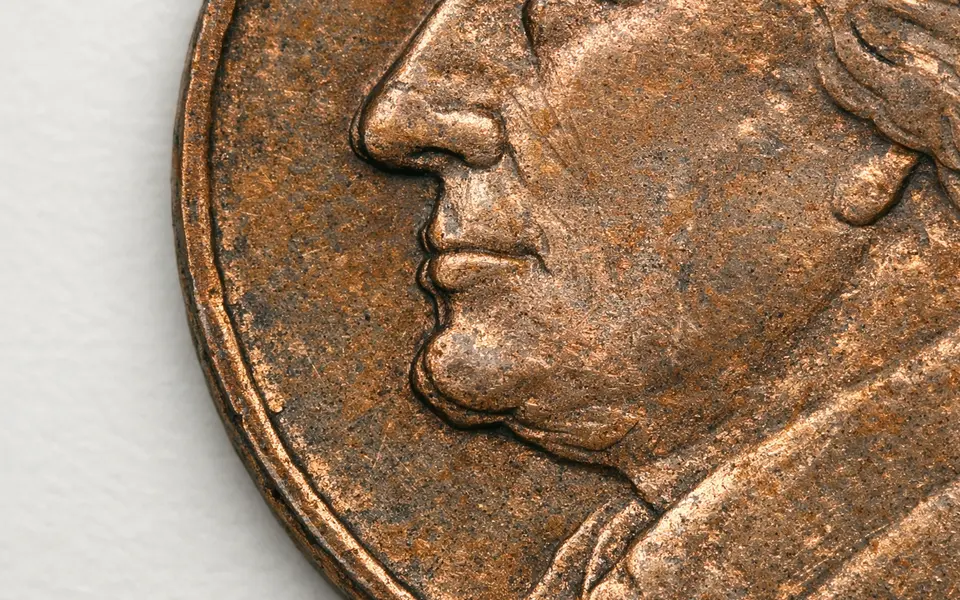
- Full-form duplication: both primary and secondary features have relief and inner detail.
- Repeated pattern: identical offset affecting multiple letters or numerals in sequence.
- Consistent direction: offset follows the same vector (e.g., slightly left-up across three digits).
- Sharp edge definition: look for crisp secondary outlines rather than soft shadows.
- Contextual anchors: adjacent non-doubled areas, die cracks, and contact marks help interpret whether doubling is on the die or resulted from later damage.
Weak signals
Color differences, surface toning, or dirt should never be treated as doubling on their own. Patina can create linear streaks that mimic doubled strokes, and dirt trapped along a letter rim often looks like a second edge in low-resolution images. Similarly, glare and reflections from strong light sources produce shelf-like highlights that can be mistaken for repeated detail.
Machine or mechanical doubling is a very common lookalike. Machine doubling appears as a flattened, shelf-like echo that lacks the inner detail of the original stroke. In photos, it often looks like a rimmed shadow sitting directly adjacent to a letter, rather than an independent repeated letter form. Because machine doubling provides a shallow impression, raking light and focused macro shots usually expose its lack of relief.
One-angle photos and low-resolution crops are unreliable. Doubling can disappear or appear exaggerated depending on camera tilt. Wear compounds the problem: when high points are worn, the secondary image can be erased, leaving only a faint ghost. Conversely, heavy patina can obscure edges or make a simple die chip read as duplication. Always capture multiple angles and magnifications before concluding the cause.
- Glare and reflections: strong highlights that mimic a second line or edge.
- Shallow shelf echoes: machine doubling shows no inner detail—use raking light to test.
- Surface deposits: dirt, corrosion, or residue can create false-positive doubling.
- Worn high points: wear can erase secondary features and produce inconsistent visibility.
- Die chips and contact marks: localized damage may repeat in adjacent strikes but isn’t a doubled die.
Step-by-step comparison workflow for likely double die matches
Start with systematic photos: whole-coin obverse and reverse, then tight crops of the date, mintmark, legends, and any suspicious design elements. Use raking light (a light held at a low angle) to reveal relief and edge separation; avoid direct flash that flattens detail. Put a neutral background behind the coin, stabilize your phone, and take multiple images at different tilts so you can compare how the apparent doubling behaves under changing light.
Next, isolate the features. Open your tight crops at full resolution and compare the suspected duplicated element against adjacent letters or numerals that should be identical (for instance, two Os or two 2s on the same coin). True double die duplication will repeat the same anomaly across multiple, similar elements with the same offset and orientation. Document which features match and which do not—this checklist becomes the basis for weighing candidates.
Compare to documented examples. Search for known double die varieties for the coin’s type and year, paying attention to authoritative photographic examples that show the same element affected. When you find a candidate example, compare the offset vector (direction and distance), the shape of the duplicated stroke, and any shared secondary marks like die gouges or hub marks that appear in both primary and known-example images.
Weight the total evidence. Create a simple scoring approach: score presence of full-form duplication, consistency across elements, match to documented varieties, and absence of weak signals like glare or deposits. A coin that scores high on all categories is a strong candidate; a coin that shows only a single fuzzy doubled stroke with heavy wear or corrosion should be treated as ambiguous and sent for closer physical inspection or third-party verification.
- Photo checklist: whole coin, obverse crop, reverse crop, date, mintmark, damaged areas.
- Lighting test: raking light (low angle) + multiple tilts to test relief.
- Feature isolation: compare the same letter or numeral across the coin.
- Document match: find reputable example photos for year/type and compare offset.
- Scoring: build a quick evidence score before escalating to professional verification.
Using Coin Identifier - Coinora after you check clues
Once you’ve photographed the coin and run the comparison checklist, use Coin Identifier - Coinora as a research-first tool to surface candidate matches. Treat the app as a way to expand your set of comparison images and to highlight candidate years or varieties quickly—then evaluate those candidates against your evidence checklist. The app’s suggestions are best used as starting points, not final determinations.
When you add a candidate to the app, annotate the images with the features that influenced your judgment: which numerals showed doubling, where the offset appears, and whether raking-light shots revealed full relief. These notes turn app outputs into research artifacts you can review later or share with knowledgeable collectors and forums. Because the site does not support web uploads from this guide, keep your photos on-device and import them into the app in the normal way provided by your phone platform.
Use the app results to prioritize next steps. High-confidence matches from the app and your scoring system can be cross-checked with reference catalogs, specialist forum images, or auction records. For ambiguous or high-value candidates, consider physical inspection by a trusted grader or dealer. Remember: app suggestions reduce time spent hunting but do not replace close inspection or professional grading if the coin’s identity or value matters.
If you want a quick refresher on general visual clues and lookalikes beyond double die specifics, consult the site’s broader primer on coin detection; it explains how to tell manufacturing anomalies from post-strike damage and how to structure a photo-based investigation. That additional context pairs well with the targeted double die checklist above and helps avoid common false positives.
- Use the app to surface candidate varieties, then evaluate each candidate with your checklist.
- Annotate images in the app with the exact features that seemed doubled.
- Prioritize high-confidence candidates for catalog comparison or expert review.
- Treat app suggestions as research notes—do not take them as conclusive proof.
Related guides
Check your clues, then compare with Coin Identifier - Coinora
Captured clear photos and worked through the checklist? Use Coin Identifier - Coinora on your phone to surface candidate matches and store annotated images as research notes. Treat app suggestions as starting points: prioritize high-confidence matches for catalog reference or expert review, and keep ambiguous cases for further inspection. Download Coin Identifier - Coinora from your device store to turn photos and notes into comparison-ready results.
Take the next step →Frequently asked questions
How can I tell true doubling from machine doubling in a photo?
True doubling (a double die) shows duplicate features with full relief and interior detail—the second image looks like a complete, offset copy of the first. Machine doubling appears as a flattened, shelf-like echo with little or no interior detail. In photos, test with raking light: true doubling reveals separated ridges and shadows consistent with raised metal; machine doubling looks like a thin shadow along the edge and does not change like a raised contour when you shift lighting angle.
Can one photo ever prove a double die coin?
A single, high-quality photo can provide strong evidence but rarely proves a double die conclusively. A single image can flag a candidate, especially if it shows full-form duplication across multiple elements, but verification benefits from multiple angles, lighting tests, and comparison with known examples. For coins with potential value or rarity, physical inspection or third-party authentication is the safest route.
Which areas of a coin should I photograph to check for doubling?
Start with full obverse and reverse shots, then take tight, in-focus close-ups of the date, legend (letters around the rim), mintmark, and any central devices (portrait, eagle, etc.). Use raking light to emphasize relief and capture shots at slightly different tilts. If you suspect replication across a phrase or number group, photograph the entire sequence so you can compare one character against another on the same strike.
Are some years or issues more prone to double die errors?
Certain mints and periods are better documented for double die varieties because of known hubbing problems or cataloging activity; classic examples include well-documented doubled die cents and other mid-20th-century anomalies. However, doubling can occur in many years and denominations. The important step is not assuming a year is immune or guaranteed—it’s to compare your evidence to documented varieties for that exact year and mint.